
Photography: Kyle Ramey, except noted
There’s a moment when riding bikes with your kid shifts from cute neighborhood loops to something bigger. The first time you consider riding to school. To the store. Across town.
And suddenly it doesn’t feel like biking anymore — there is a sense of belonging and relationship building with your community and family while teaching your child how to move through a world built mostly for cars.
If you’re wondering how families actually make biking in cities work, here’s the honest answer: it doesn’t happen in one afternoon. It’s a progression. And when you approach it that way, it becomes far less intimidating — and a lot more joyful.
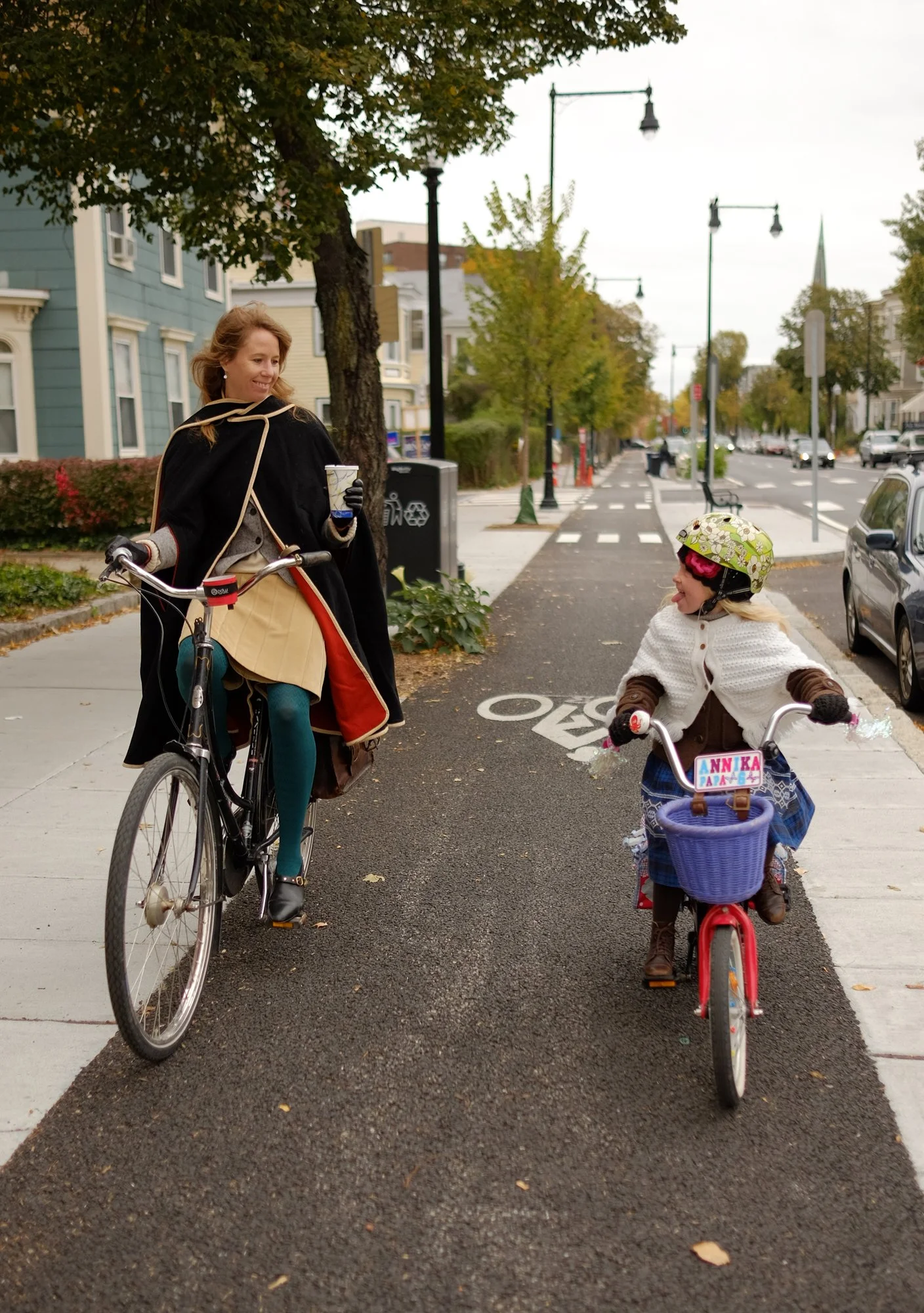
Bikabout founder, Megan Ramey, riding alongside her daughter, Annika, on the Western Avenue cycletrack in Cambridge just after the ribbon cutting for the bikeway.
Click image for Boston by Bike guide.
About our Family
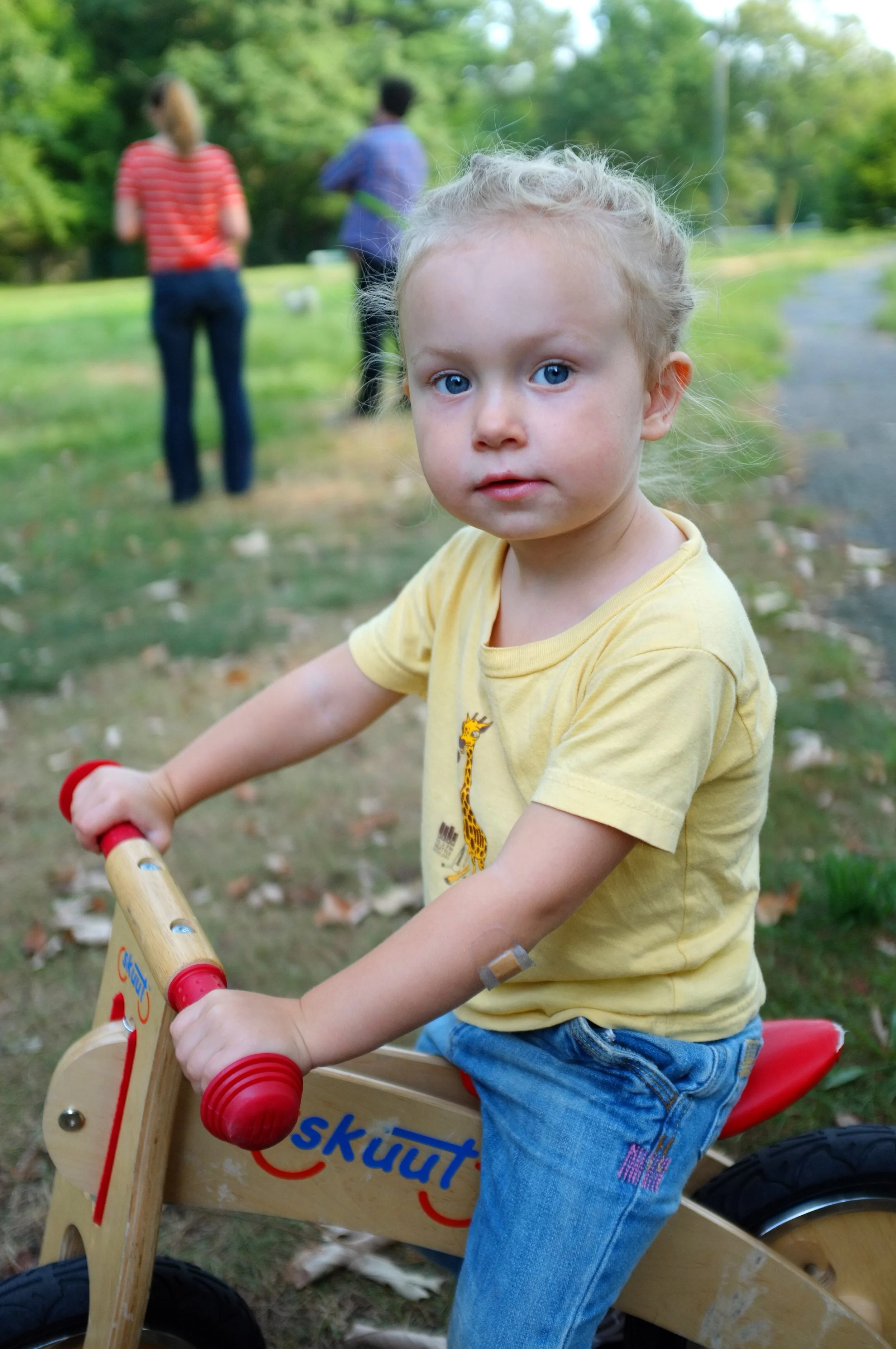
Annika mastering balance on her Skuut. The transition to a pedal bike was seamless!
We been riding bikes for transportation for more than two decades, in cities as varied as Madison, Atlanta, Boston, and Portland — along with more than 30 additional communities we’ve documented through Bikabout.
We’ve also been a biking family since our daughter was born 16 years ago. She started as a baby in a car seat tethered to a Burley trailer, then a toddler on bike seats mounted to the front and rear of our bikes, she took naps in a cargo bike before learning to ride a balance -> pedal bike, and now she rides an e-bike to school daily.
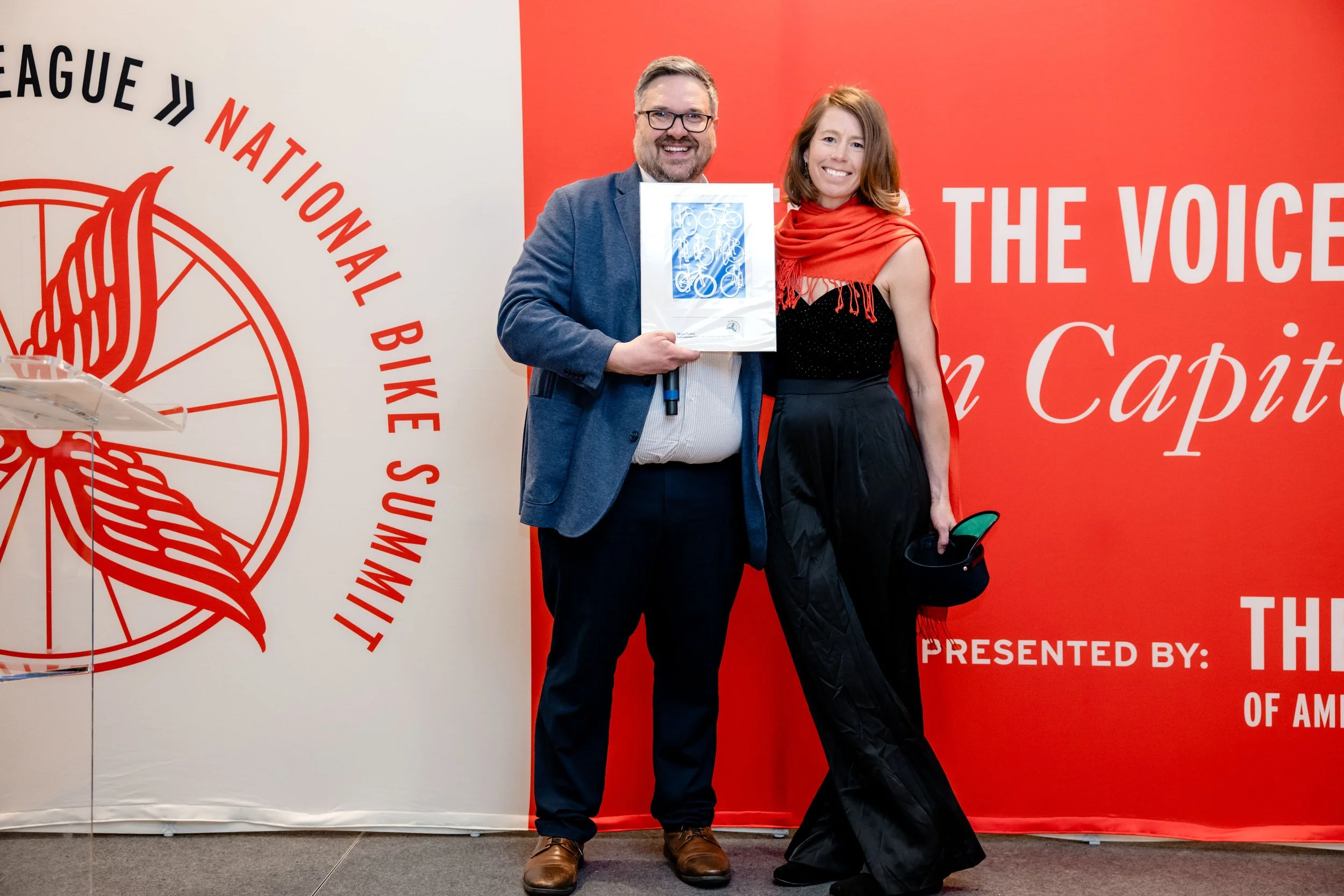
Megan is the Safe Routes to School Manager for Hood River County School District, where she teaches over 1500 students, kinder through high school, biking confidence and joy every year. She was recognized by the League of American Cyclists as the Educator of the Year in 2025.
Professionally, I teach more than 1,500 students each year — from kindergarten through high school — how to ride with confidence, safety, and joy as the Safe Routes to School Manager for Hood River County School District. In 2025, I was honored as Educator of the Year by the League of American Bicyclists, recognition of the work our community is doing to make everyday riding possible for families.
“In my parenting journey on a bike, I’ve learned that wherever we are is okay, sometimes confidence meant riding a route alone several times before bringing my kids along. Finding the right cargo bike for longer trips made all the difference (I’m on my third as our babies grew from toddlers to a 2nd and 5th grader) - and this year, we bike camped for the first time, and my bike-parenting dreams came true. 🚲”
Why Bike as a Family for Transportation
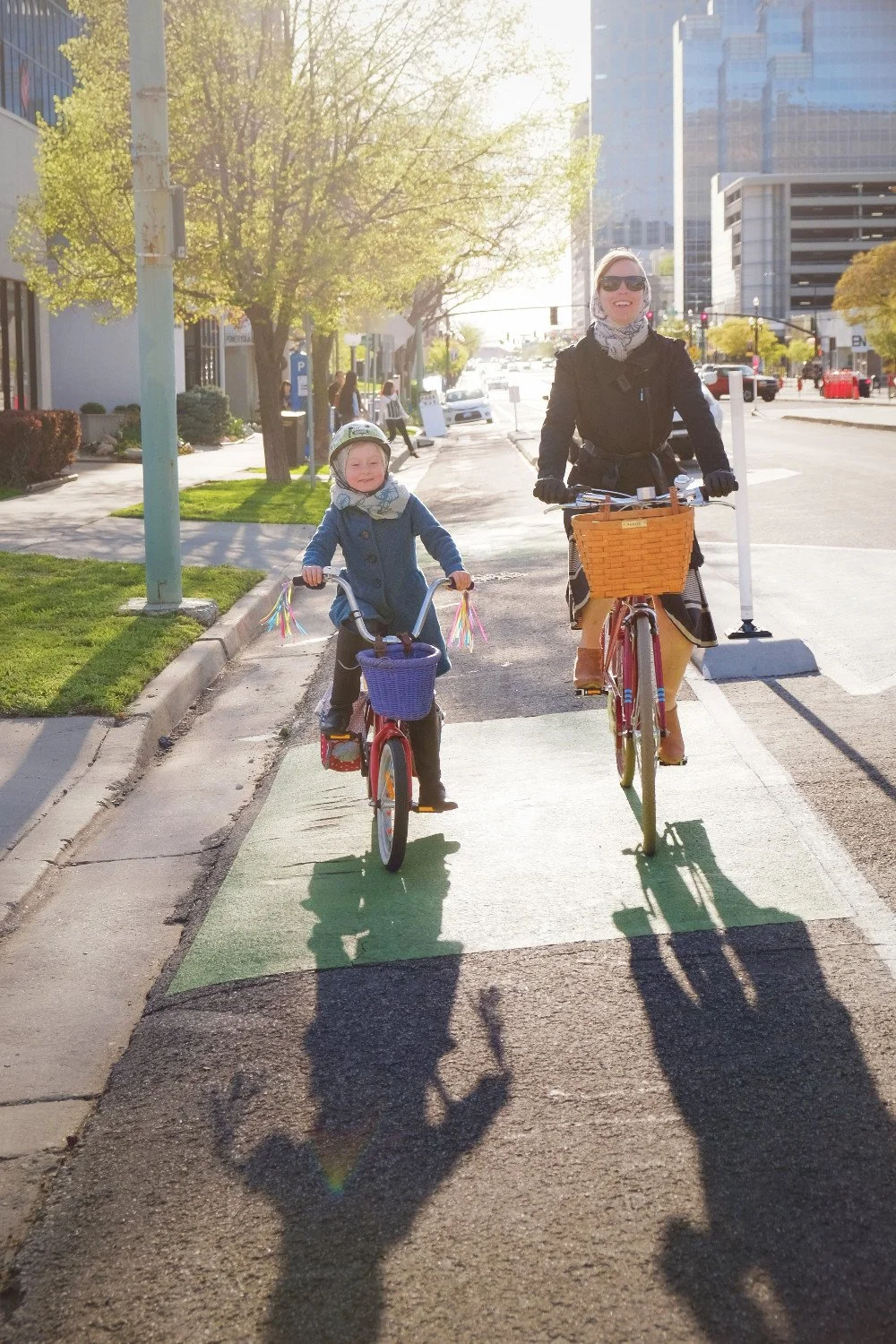
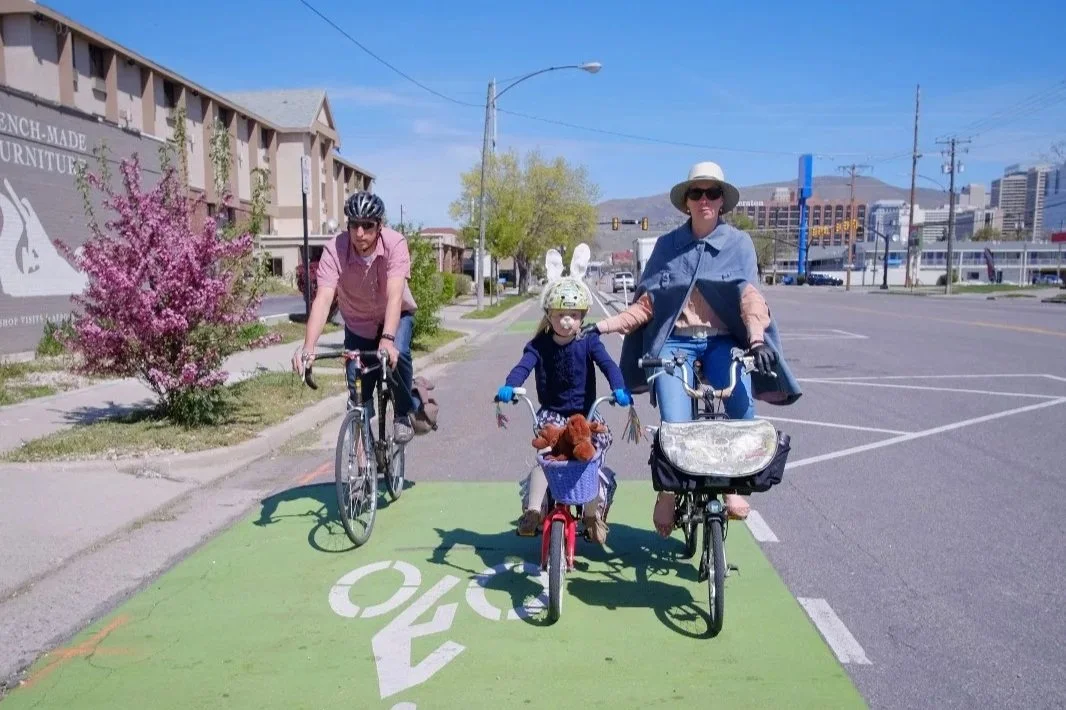
Author and daughter sharing laughter while riding on one of Salt Lake City’s protected bike lanes.
Click photo for the Salt Lake City by Bike guide.
The Benefits
Bikes aren’t just recreational toys. The US Health and Human Services Office of Disease Prevention and Health Promotion promotes walking or biking to school as a way for children to help achieve the recommended 60 minutes of daily physical activity.
When kids ride for transportation, they gain:
Independence from parents driving kids around
Confidence and awareness in navigating their own neighborhoods
A sense of capability
Connection to their local community
Empathy for all of their neighbors, no matter how they get around their neighborhoods, towns or cities
And maybe most importantly — it becomes fun in a new way. Riding somewhere with purpose feels different than riding in circles around the cul du sac or doing a loop around the park, which is often the only place parents feel comfortable letting their kids ride in cities built only for cars.
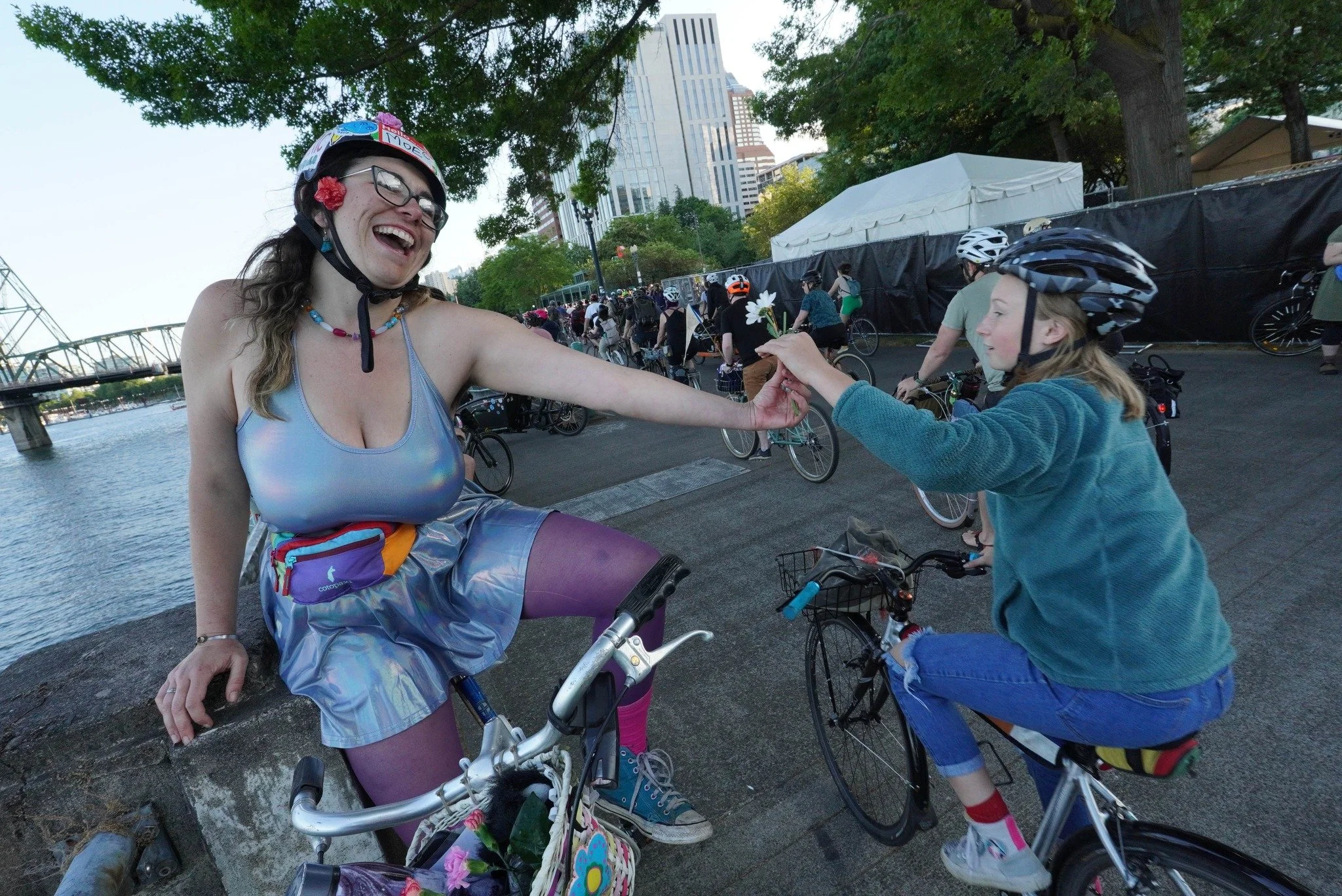
Biking is Community. Annika sharing a moment with a new friend on Portland’s Pedalpalooza kick-off ride to start summer.
Click image for Portland by bike travel guide. Photo by Jonathan Maus of Bike Portland
“I’ve always seen biking with kids as more of an extension of parenting than of bike commuting—there are lots of right ways to do it (my own parenting/family biking style is playfulness with distraction when necessary)...and always bring snacks! Notable transitions in our family biking journey were when my kids graduated from sitting on my bike to riding on their own—first riding in front of me so I could call out directions and safety reminders while they set our pace, and then riding behind me when I knew they could follow along as members of our little family bike bus.”
Getting into the Parent Headspace
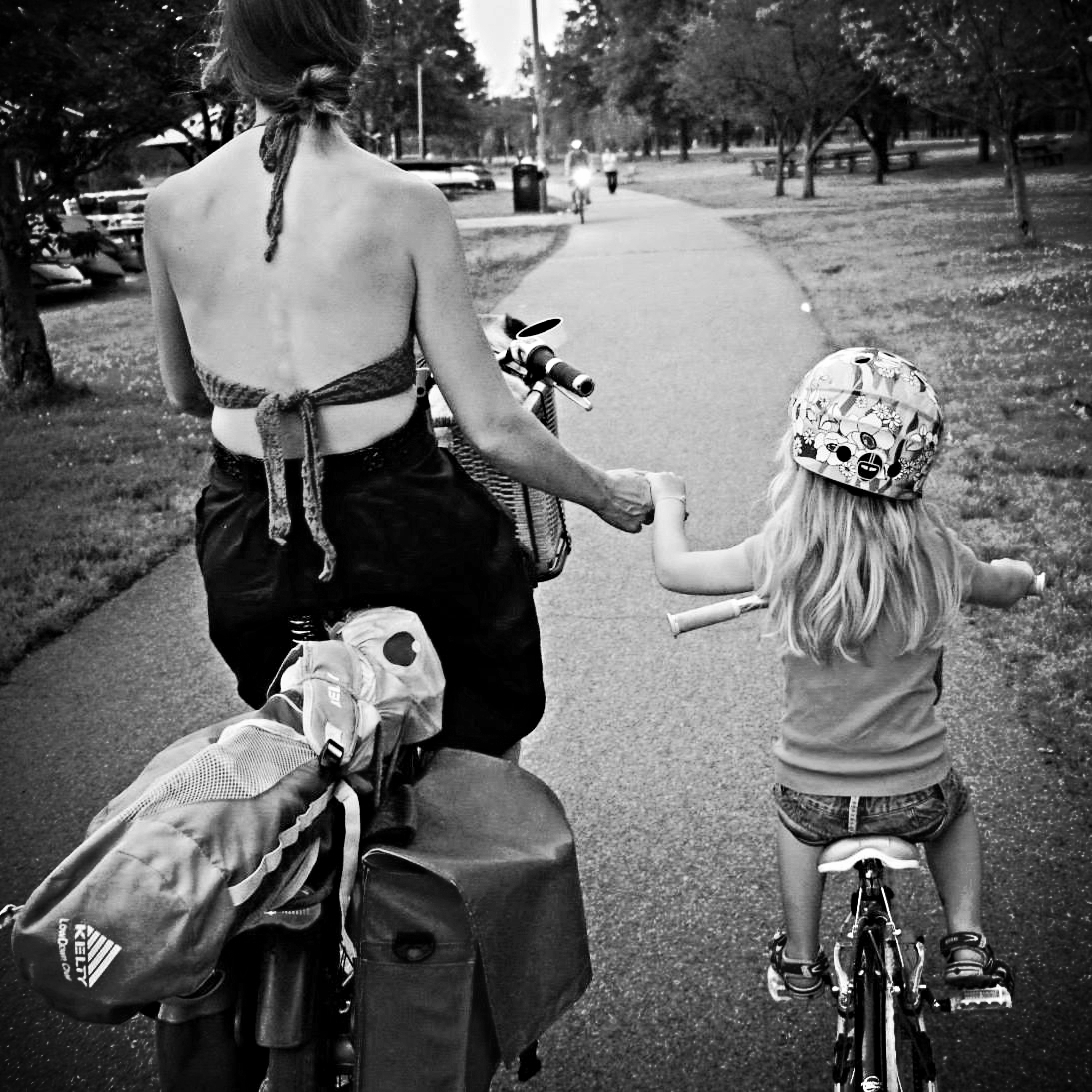
Megan and Annika holding hands while biking. Biking with your children can be an incredible bonding experience but we also acknowledge the fear, frustrations and mama-bear moments along the way.
Before we talk about skills, we have to talk about you.
It’s Incremental
Urban riding is layered. You build one skill on top of another. You don’t skip steps.
Patience Is a Skill
Your nervous system sets the tone. If you’re tight and anxious, they will be too. Calm riding is contagious.
SH*T happens
Meltdowns
Mechanical issues
Crashes, scrapes and bruises
All of these happen at some point. Be prepared to hit the eject button.
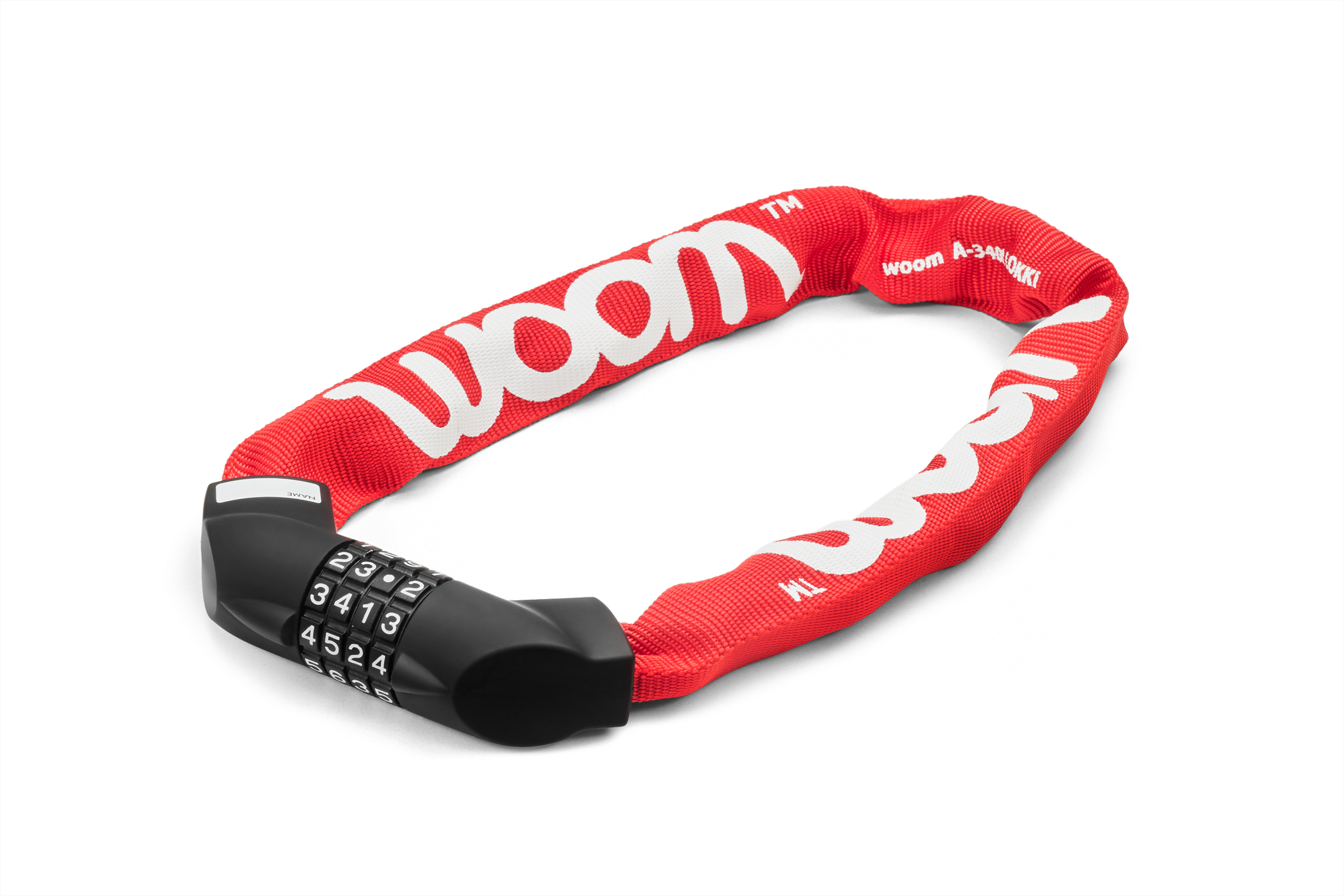
bring snacks & Locks, and take a Taxi, if needed
Snacks are a great way to reward or distract your kiddo when shit happens. Locks are great to temporarily lock up your bike and take a taxi or transit home. You can come back later to pick up the bikes.
It’s not your fault
Streets are dynamic and sometimes dangerous places. Decades of bad planning have put the vehicle at the top of the food pyramid and we know that many towns and cities do not have a robust network of bikeways. Do the best you can with what you have and use your voice to support better bike infrastructure - more on that below.
Your Comfort Matters
If you don’t feel comfortable riding in the street alone, start there. Practice solo. Learn your routes. Notice traffic patterns. Kids borrow confidence from what feels normal to you.
See the great instructional video for adults on how to build bicycle commuting confidence.
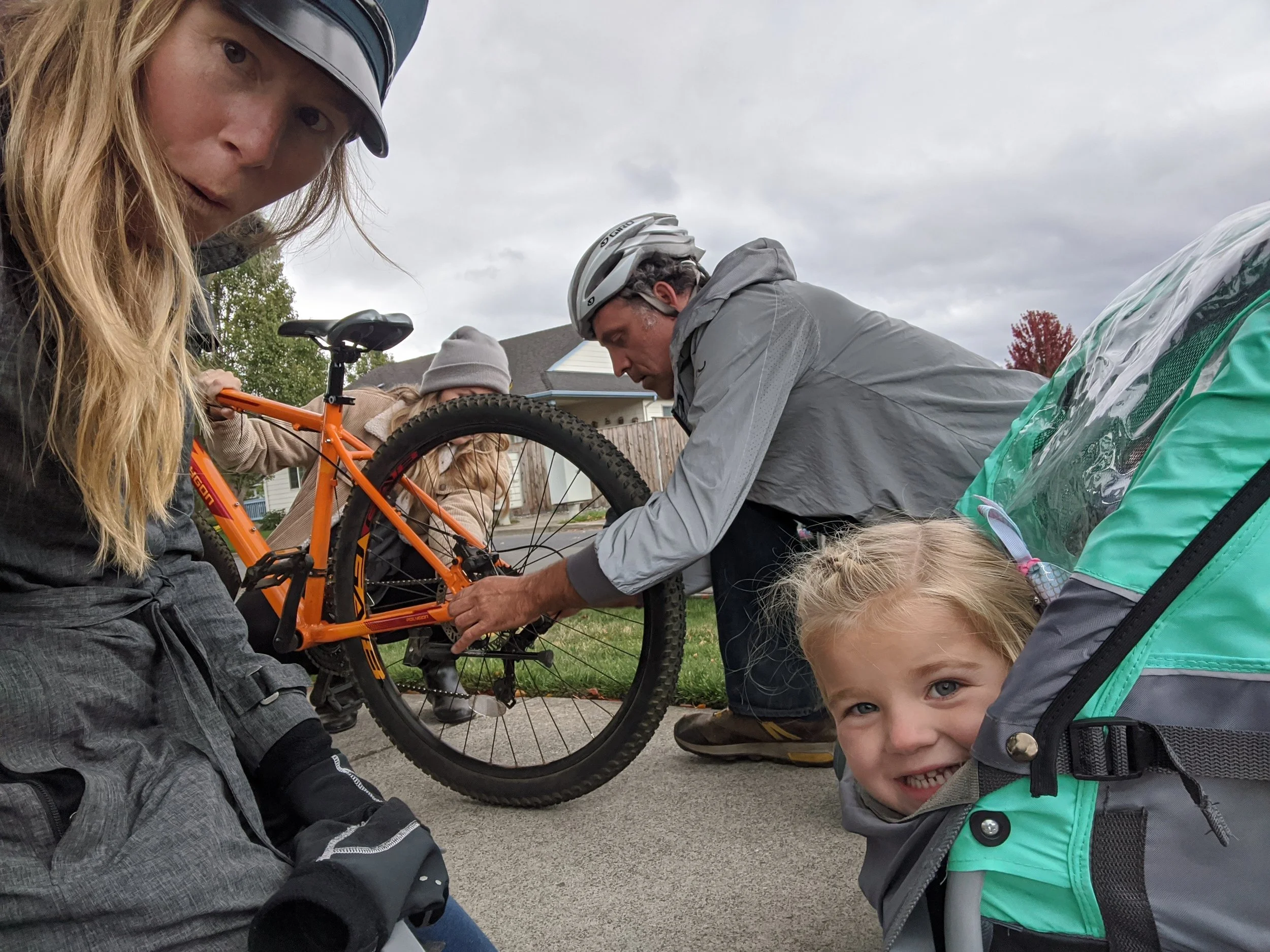
Mechanical issues happen. It takes a village. During one of the Bike Bus rides in Hood River, a kind Dad helped a Mom fix her small issue and we were rolling!
“Growing up in the 80s, my bike was my first taste of true independence. Now, as our age group has grown into the ‘cargo-bike family generation,’ we’re refusing to outgrow that freedom. We’re bringing our kids along for the ride—transitioning them from our front buckets to their own handlebars, one school run and grocery haul at a time.
Urban change is a difficult, uphill climb, but by normalizing these trips, we’re building a constituency that treats the bike as essential infrastructure. These kids aren’t just passengers; they’re growing up with a natural, intuitive sense of agency over how they navigate their world. Looking at the independence they’re inheriting, I’m putting my money on them.”
Bike, Helmet and gear
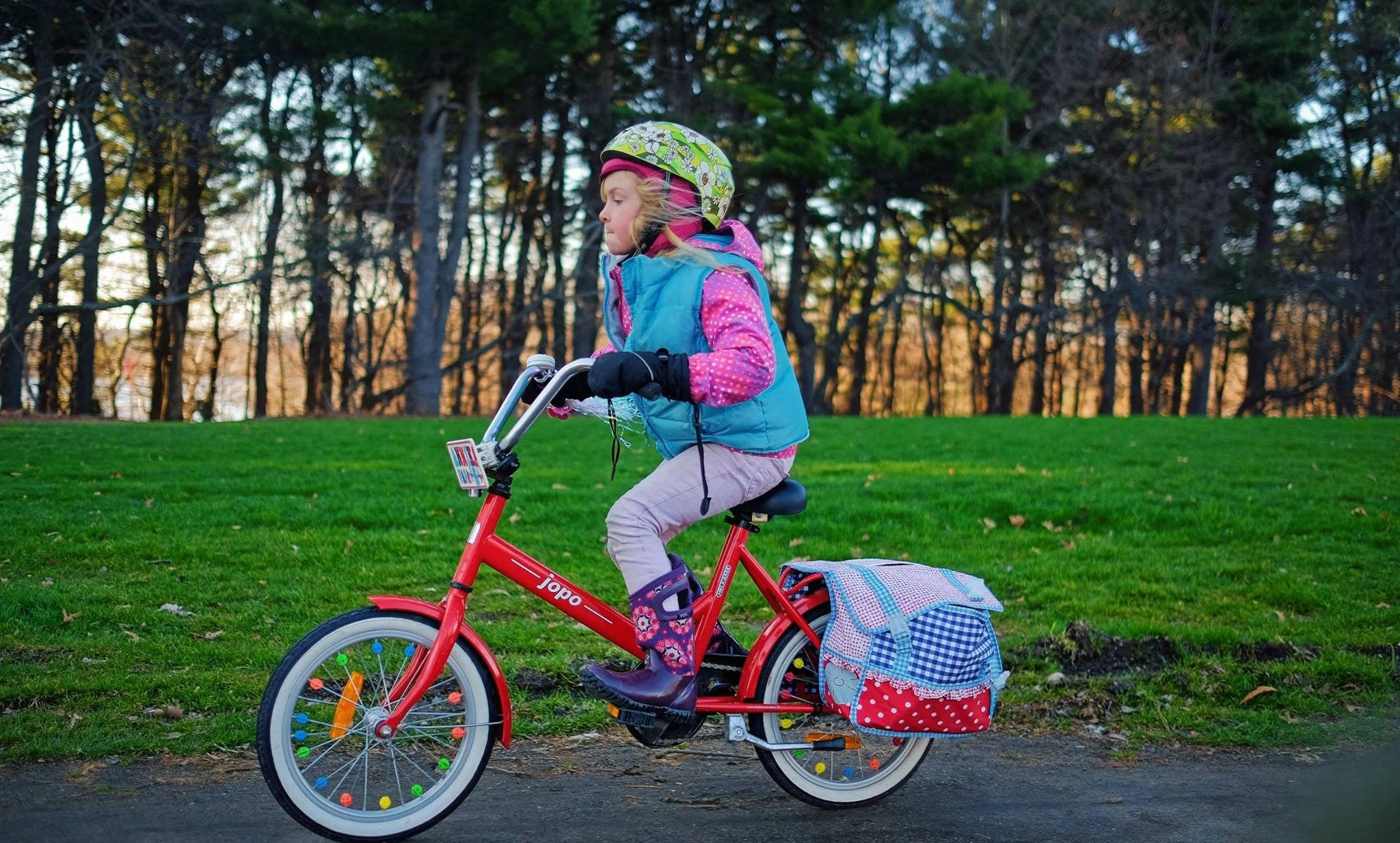
Yopo, Woom and Frog are some of our favorite bikes for kids AND they hold their resale value!
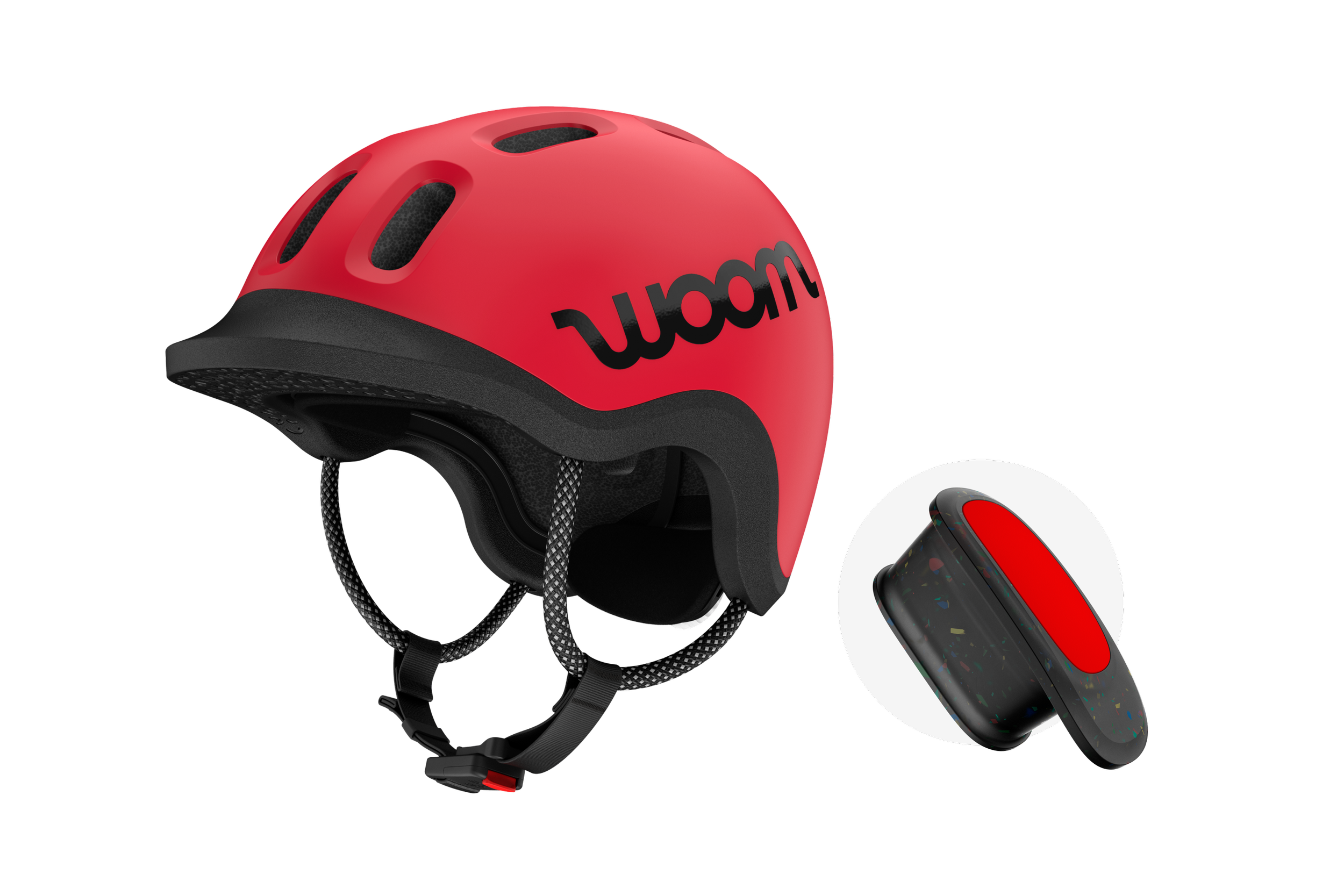
If your child loves their bike and helmet, they are more likely to love riding with you. Whether you find them one used or new, try to involve your kid in the picking. Especially helmets - they can be super individualistic and fit any child’s personality.
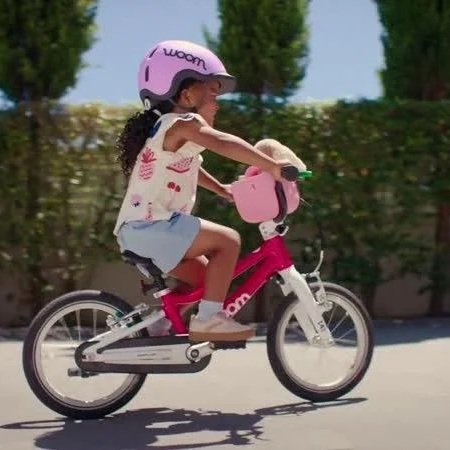
Woom is one of our favorite kids’ bike brands. Click image to purchase.
Make sure:
The bike fits well
Brakes work smoothly
Gears shift cleanly
Tires are inflated
Helmet fits properly
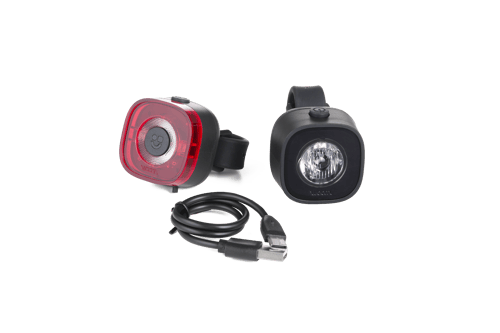
Lights are installed for visibility if biking before dawn or after dusk (this is really fun!)
Rain jacket or fun hi-vis like… Go-Fluo and Cleverhood. Sign up for our newsletter for a 15% promo code.
A bike that feels reliable builds trust immediately.
Rain Jackets and Capes
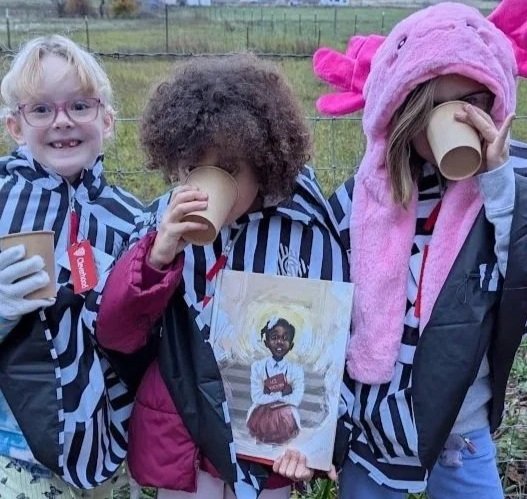
Cleverhood has the cutest, most functional rain outwear!
Hi-Visibility Vests and Jackets
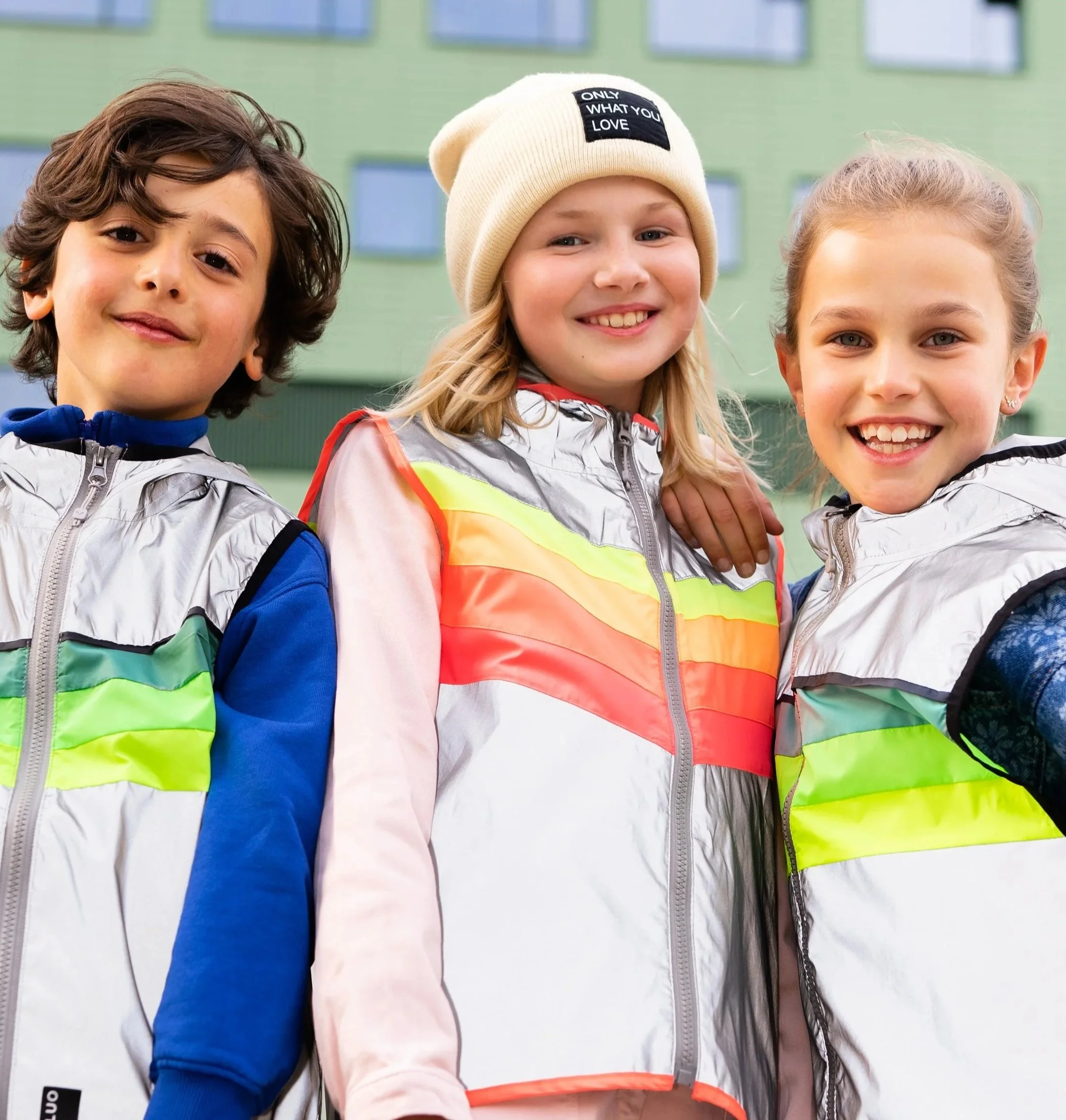
GoFluo makes the most fun and functional hi-visibility outerwear. Founded by a Danish mom who fashionista who was unspired by the options, she went through the rigorous standards of the Danish government to get the product approved as hi-visibility.
Sign up for our newsletter below for a 15% off promo code to Cleverhood or GoFluo.
Step 1: Learn to Ride a Bike
Author teaches a kindergartner how to ride a bike as part of her job as Safe Routes to School Manager.
3 easy steps to teach anyone how to pedal
1. Start with balance
Remove the pedals (or use a balance bike) and lower the seat so both feet are flat on the ground. Skip coaster brakes (pedal backward to brake) if you can—they can make learning harder. Balance comes first, pedaling comes later.
2. Master the 5-second glide
Find a smooth, gentle slope—pavement or packed dirt works great. Have the rider sit on the seat and walk the bike downhill, eyes up and focused on something ahead. Practice until they can lift both feet and glide for 5 seconds. That’s the magic moment.
3. Add the pedals
Put one pedal back on and repeat the glide, placing a foot on the pedal. When that feels steady, add the second pedal. Encourage a smooth forward push.
If they pedal backward, stand in front, hold the handlebars steady, and coach them to press forward.
That’s it—balance, glide, pedal. 🚲
After they can balance and pedal, make sure they can:
Brake gradually (“ease the squeeze”)
Stop quickly and under control when needed
Ride in a straight line
Turn without cutting corners or swinging wide
Shift gears smoothly, if applicable
These skills should feel automatic before you add cars to the mix.
Step 2: Practice before you take to the streets
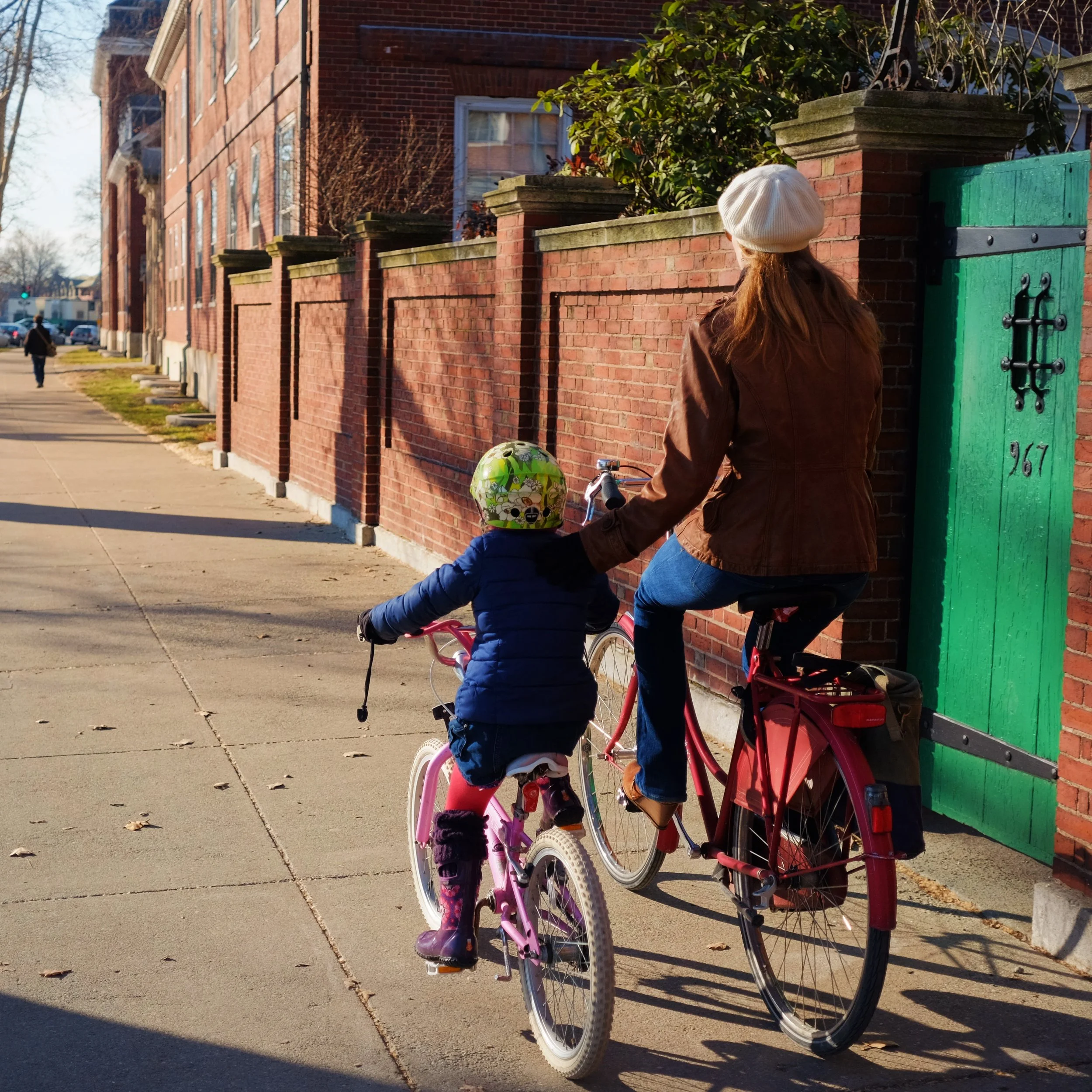
The “Mom” boost. In the absence of bikeways that accommodate side-by-side riding with your kids, don’t feel guilty about riding your bikes as a family on the sidewalks, but make sure to defer to people walking.
Great places to practice:
Trails
Schoolyards
College campuses with paths
Tracks
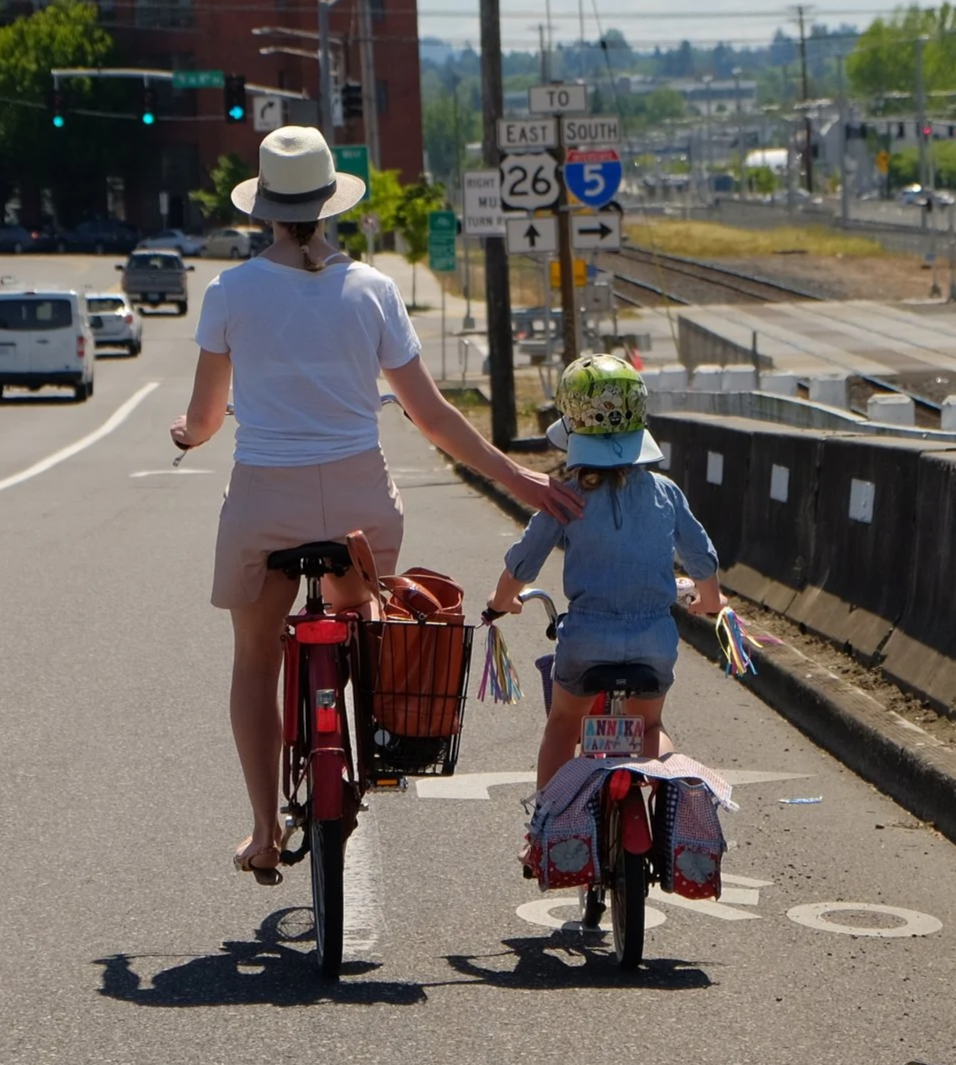
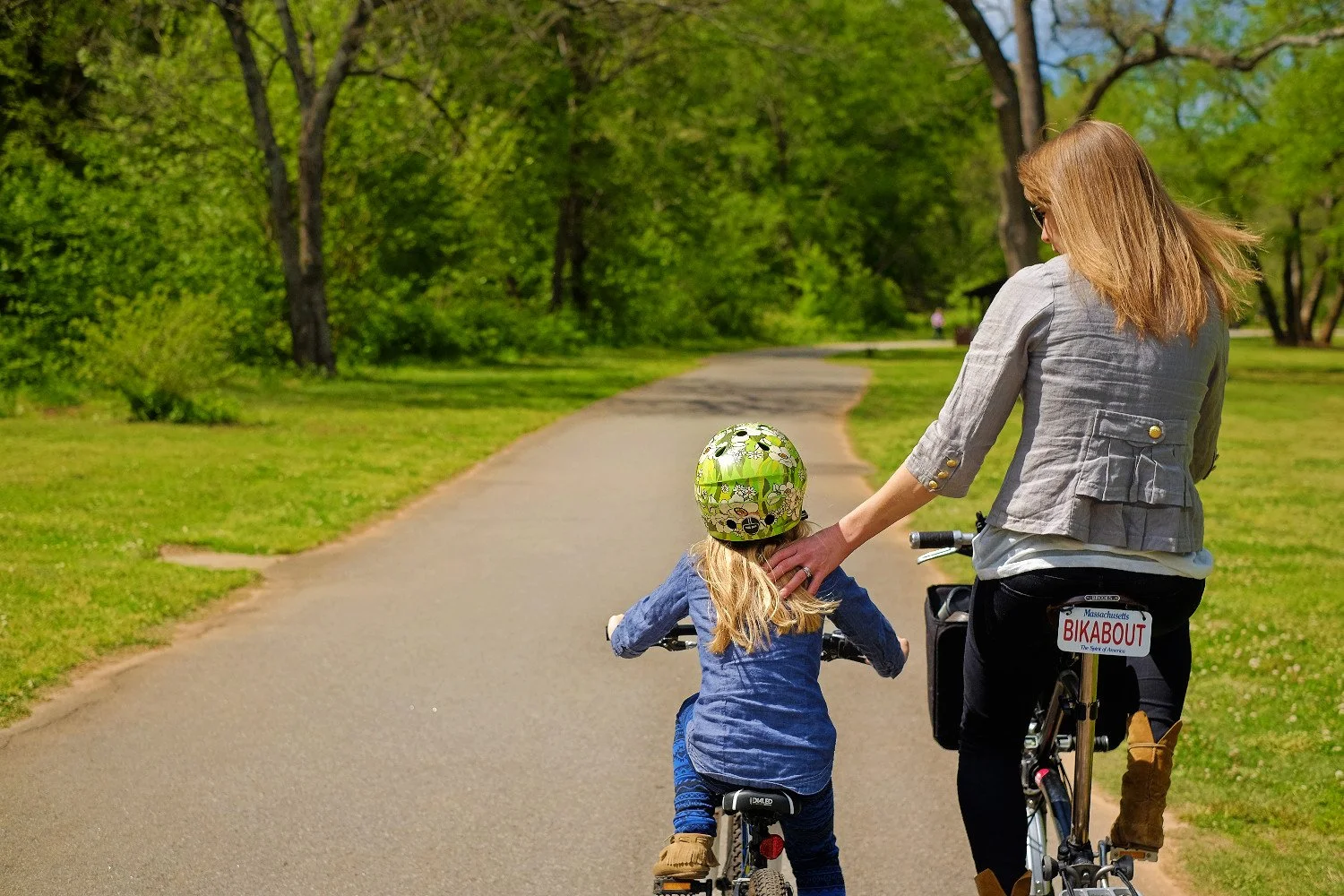
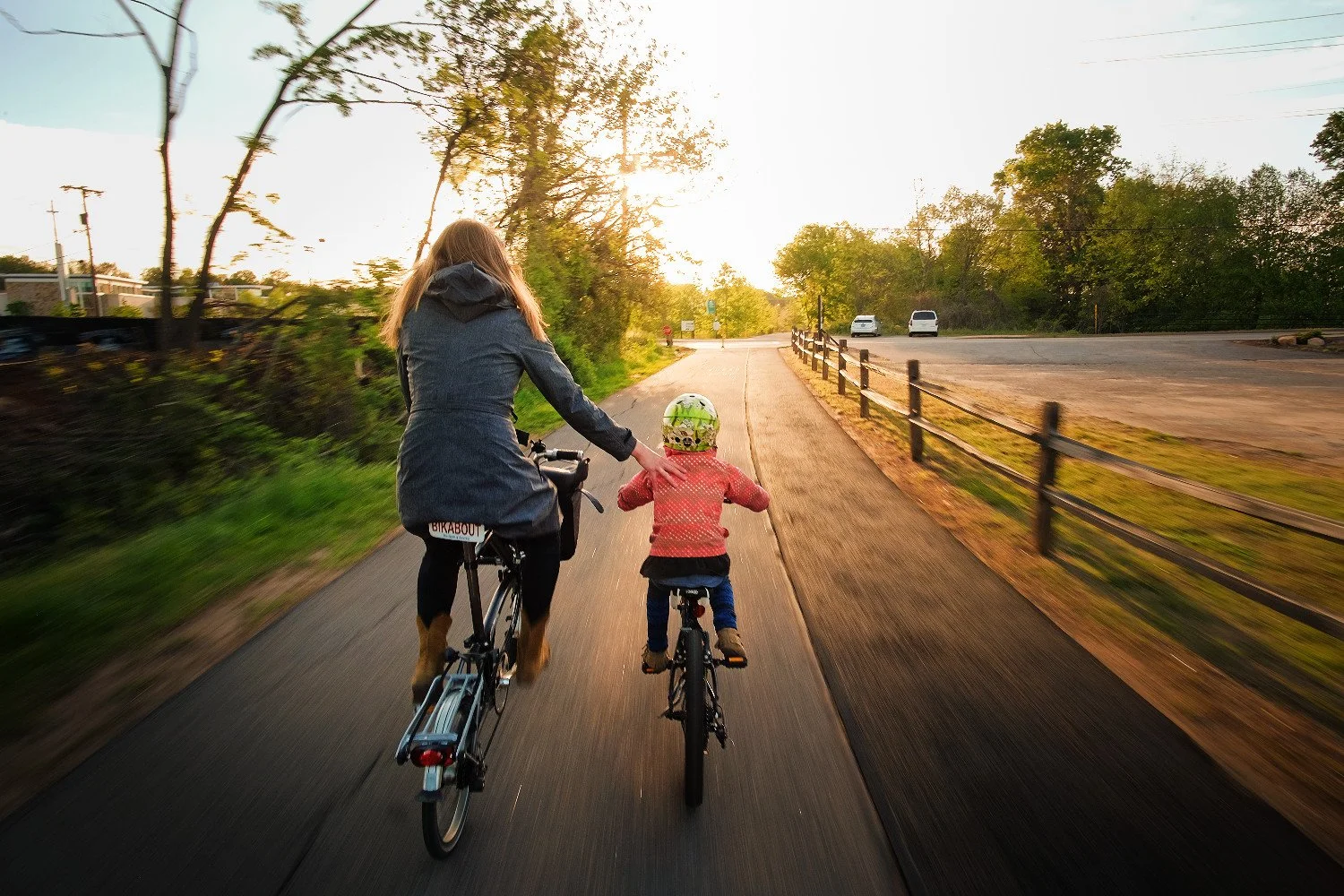
Learning the “mom hand or push” is a game changer for navigating complex urban environments and guiding children while talking to them.
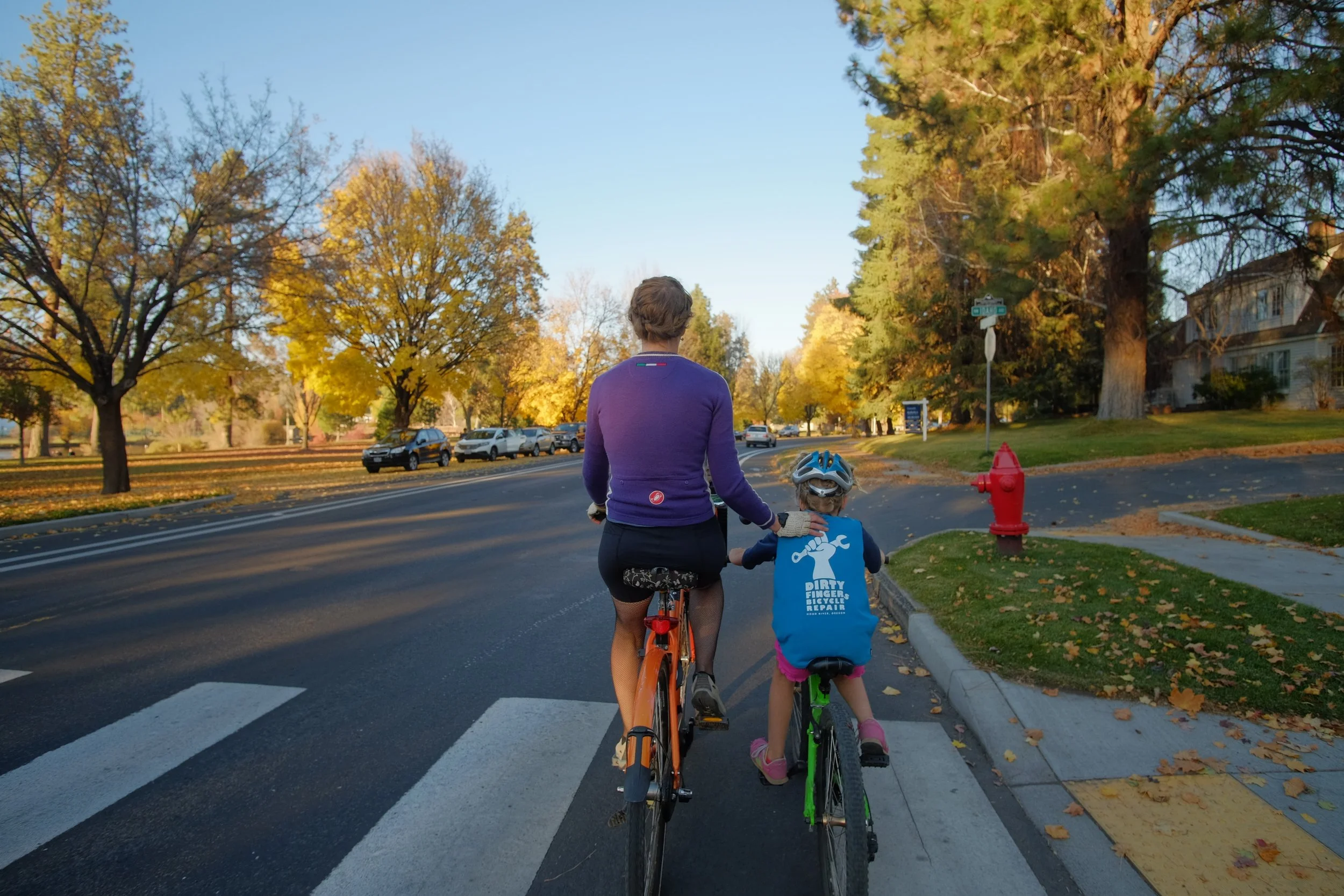
Practice riding side-by-side with mom or dad or grandparents. If you are comfortable, you can even offer a “mom/dad” boost by placing your hand on their back while riding. You can push them and guide them through tricky intersections or traffic situations.
Practice stopping at pretend intersections. This is why school campuses or shopping centers are valuable. If you stick to the walkways, you can stitch together a route that includes stopping, yielding and turning.
Practice looking over a shoulder without swerving. This can be a fun game. Find a wide open space without cars like an empty church parking lot and ask them to turn their head while riding to see how many hands you are olding in the air, 0, 1 or 2. Usually you need to look over your left shoulder in America but practicing on both sides is good for balance and confidence.
Scanning is one of the most important skills they’ll develop — and it starts here.
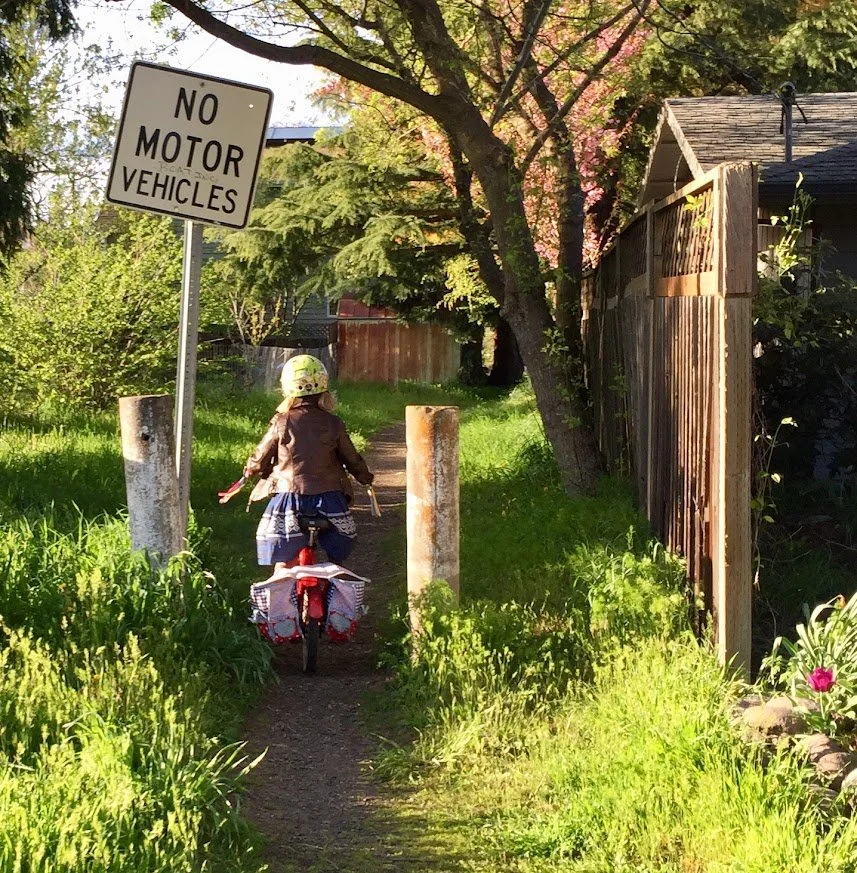
Neighborhood paths make for great practice grounds.
Step 3: Walk before you Bike
This step is often skipped.
Walk your future route together.
Talk about how to cross the street.
Point out intersections.
Notice where visibility is limited.
Identify calm streets.
When kids understand the environment on foot first, the bike becomes less overwhelming.
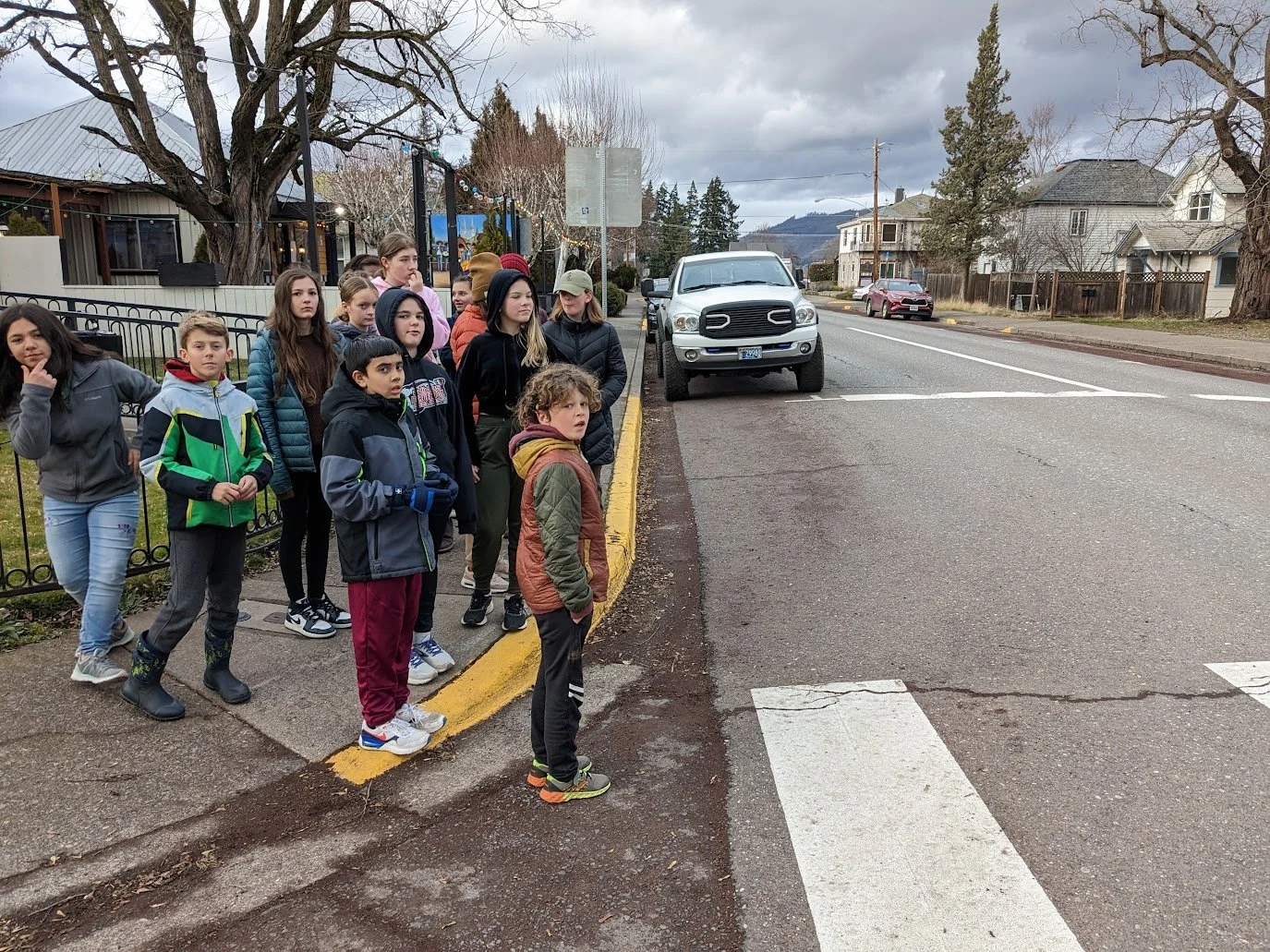
Students walking the neighborhood around their school, practicing observation and what to look out for, like the large truck blocking visibility to see traffic before they cross.
Signs that kids are ready for the street
Look for consistency, not perfection.
They:
Ride in a straight line
Stay calm under mild stress
Brake smoothly and can stop suddenly if needed
Listen for instruction
Can ride steadily beside you
If one of these isn’t solid yet, keep practicing off-street.
There’s no rush.
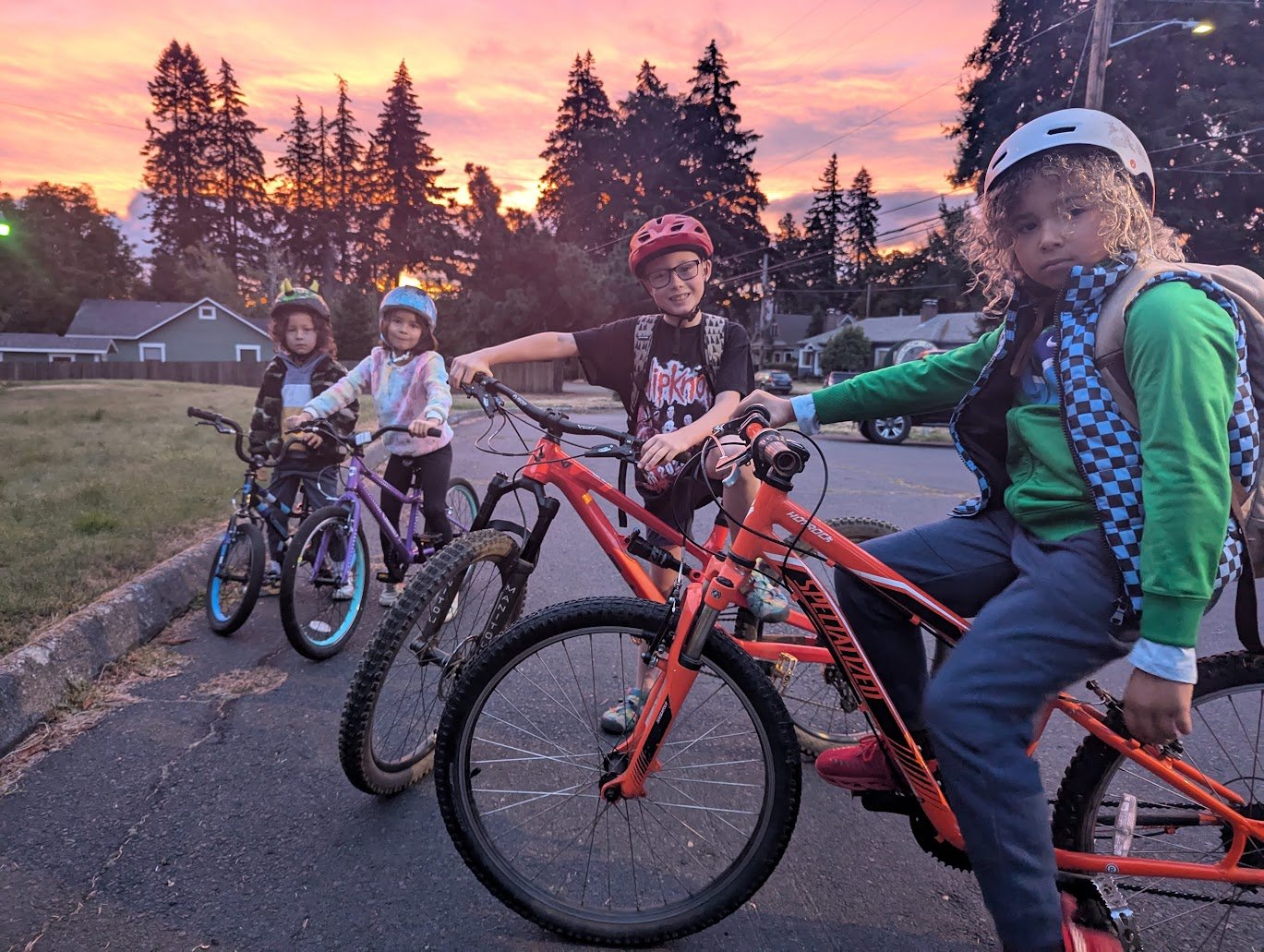
Getting There (When They’re Not Ready to Ride the Whole Way)
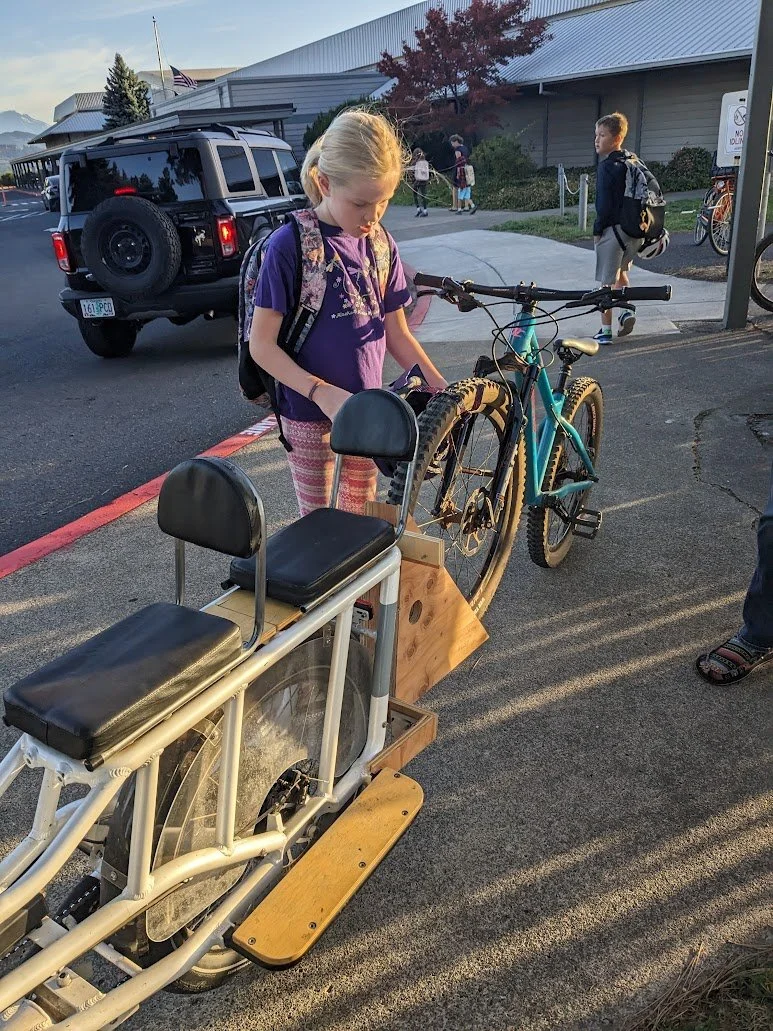
Long tails like this can be adapted to tow kids’ bikes.
It doesn’t have to be all or nothing. Heck, the premise of the Bikabout website is multi-modal. We have put our bikes on other bikes, trains, planes, buses and ferries. This is part of the adventure and teaches kids that it’s possible to get around or go longer distances without a car.
Options include:
A cargo bike
A tow rope
Riding one direction and taking the bus or subway back
Walking tricky sections
Gradual exposure builds confidence without a stressful meltdown.
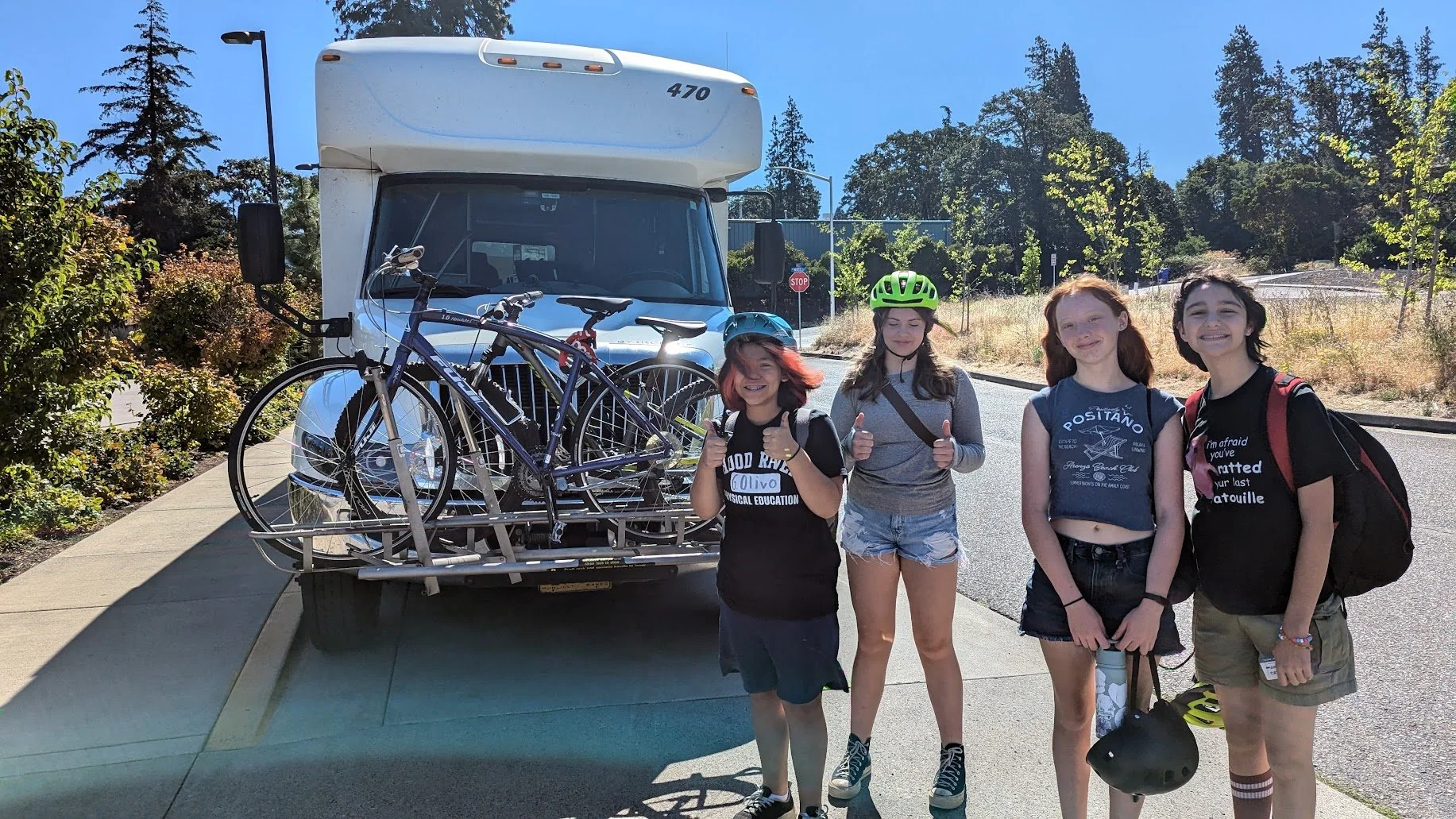
Megan takes her summer walk-n-roll club on multimodal adventures using the local bus. Putting your bike on the bus is a great way to traverse longer distances, ride one-way and make friends!
First Street Rides
Keep it short. Keep it simple.
Choose:
Calm residential streets
Trails when possible
Protected bike lanes
Distance matters less than success. End the ride before anyone feels fried.
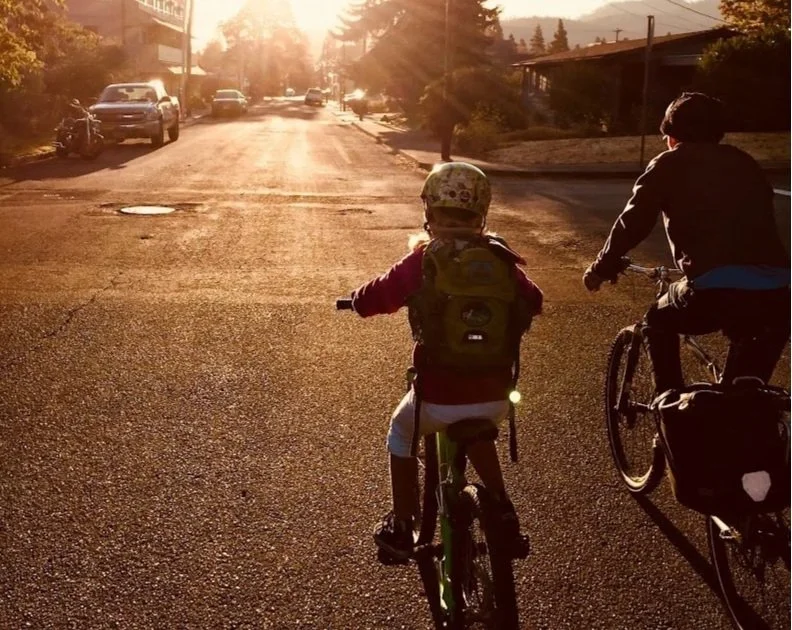
Dad and daughter riding side by side to school.
Advanced skills
Over time, your child may:
Know the route
Ride in front
Signal one-handed
Shift efficiently
Scan intersections independently
This is when they begin riding with you instead of just next to you.
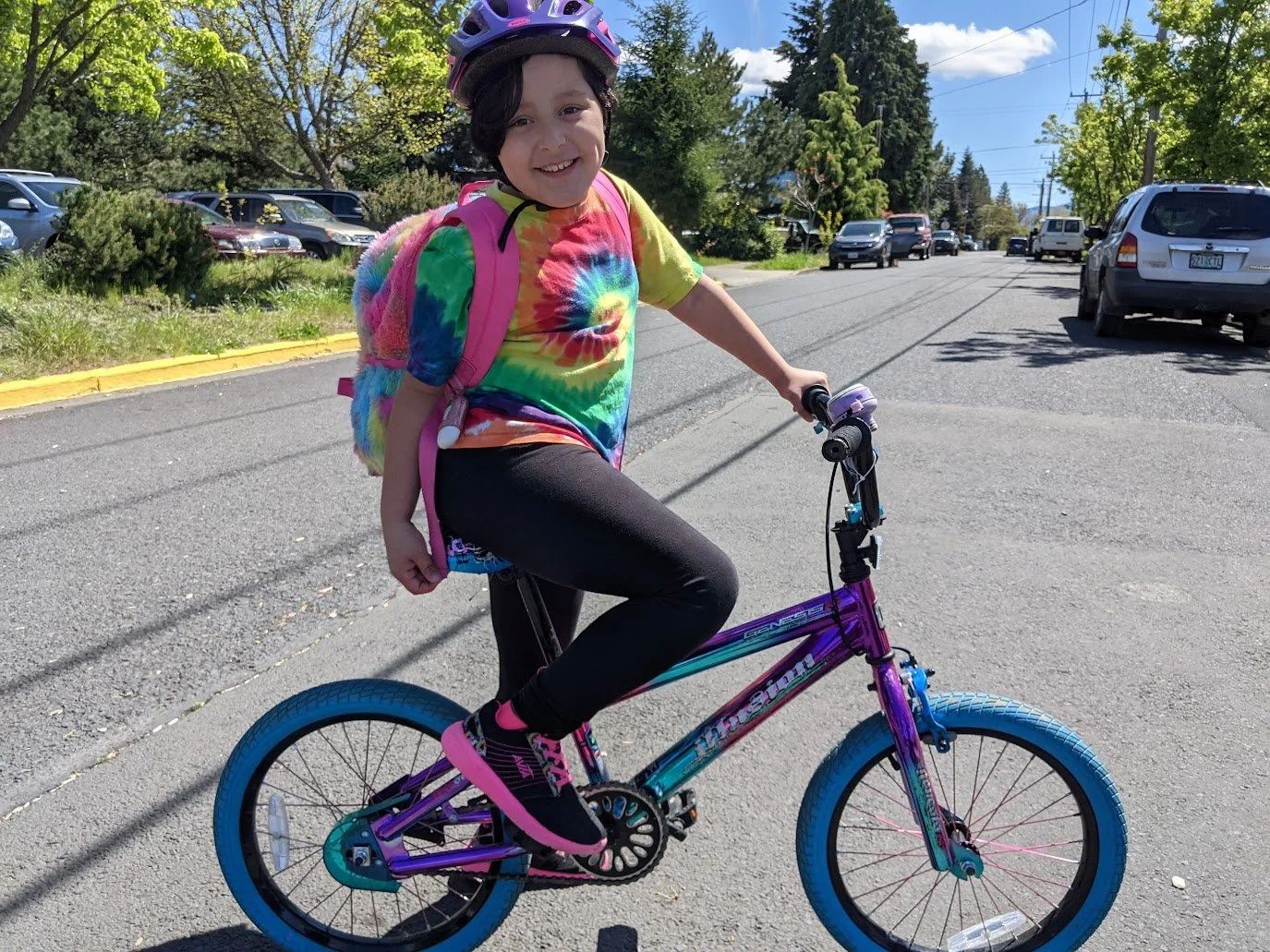
Lilli was a student of Megan’s who joined the Earth Day bike bus to school and kept riding!
Keep it FUN
This might be the most important section.
Bring a friend.
Pick a destination — a park, a bakery, a snack stop.
Celebrate small wins.
Avoid constant mid-ride coaching.
If it stops being fun, reset. Confidence grows in joy, not pressure.
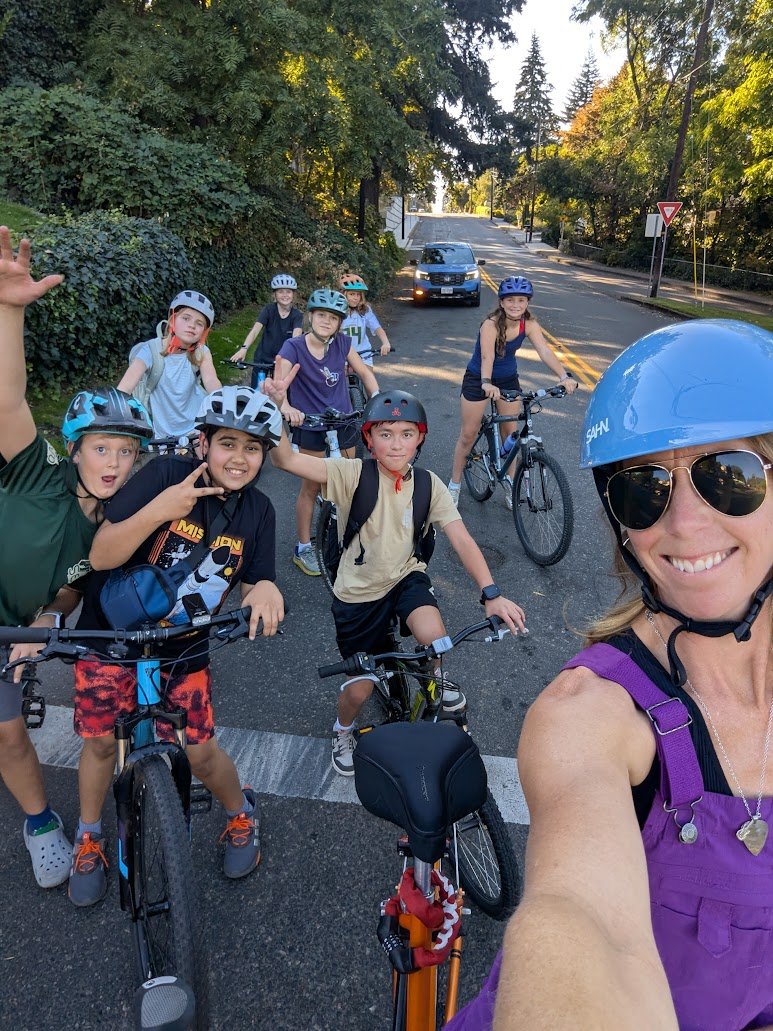
After school walk and roll club is a fun way for middle schoolers to learn more advanced biking skills.
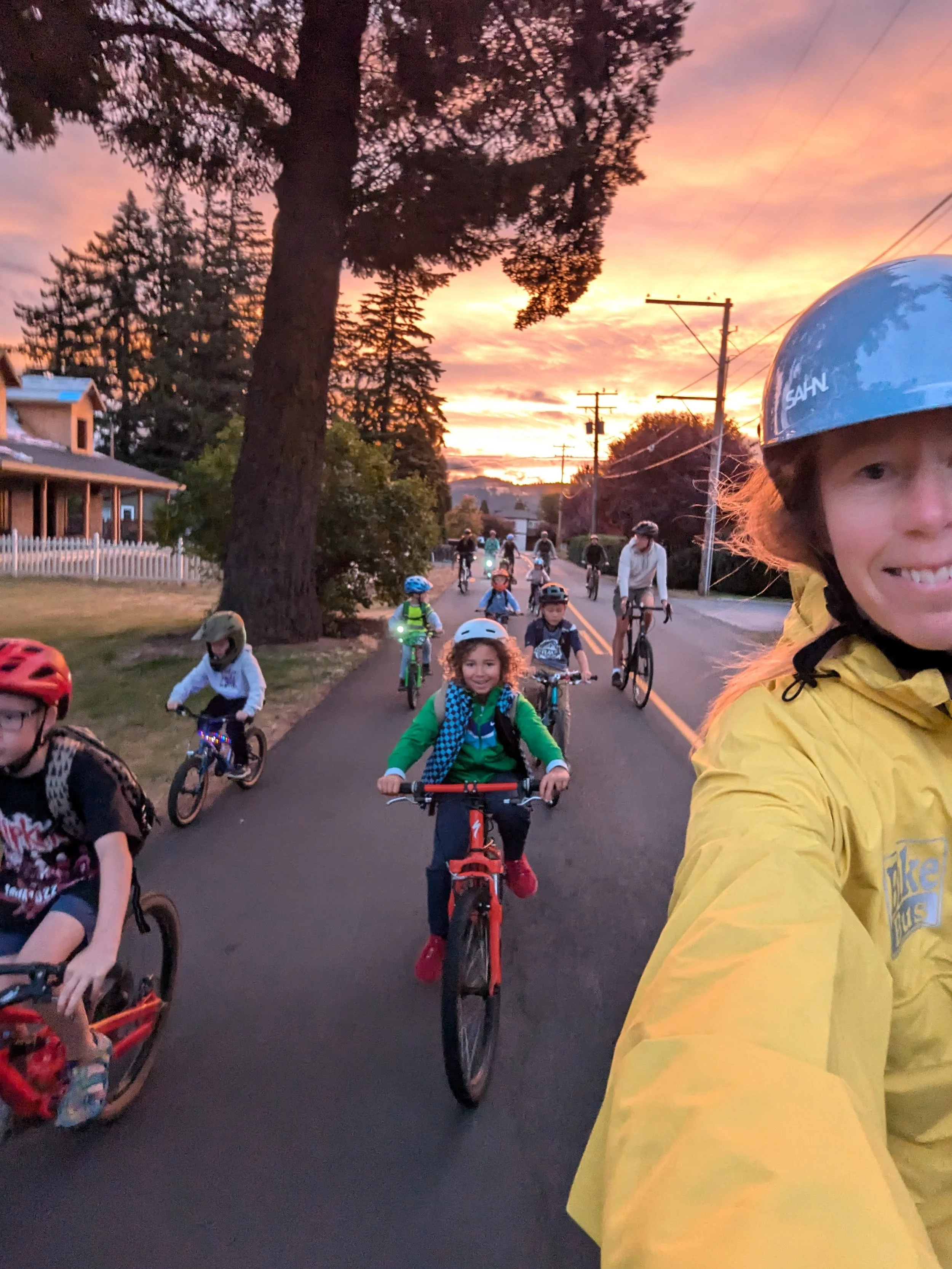
Bike Bus to School teaches kids biking confidence and traffic etiquette in a joyful setting: with their friends.
“Learning to bike with my daughter not just on off street trails but around our community and even in the city was a part of parenthood that taught me as much about how to move safely in a world that isn’t always designed with the needs of children in mind and about how to facilitate independence of mobility for my child. By not relegating her to the backseat of a car for every trip (besides the ones we could take by foot), I felt I was giving her an opportunity to become part of the world around her, rather than just a passenger moving through it, and to identify ways within her own body to move safety within it.”
Use your Voice - Advocate for Kid-friendly Cities!
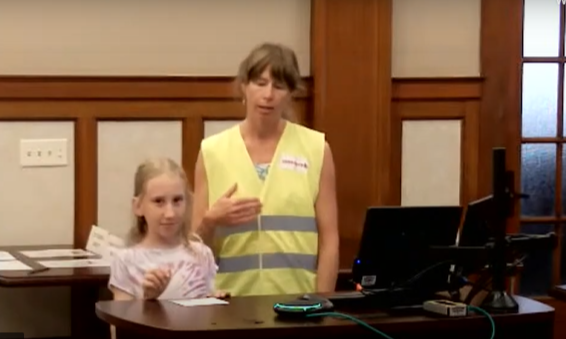
Megan and a student testifying in support of safer infrastructure for kids.
You have the power to change anything. Especially as a parent. When a street or intersection feels unsafe, write to your local advocacy organization and if you don’t have one, write to your City Council or Mayor. Invite them to ride with you - there is nothing that works faster than a politician experiencing a street with a child and feeling the vulnerability alongside you.
Find your local advocacy organization or bike shop using the blog post below.
The Big Picture
Riding bikes in cities isn’t a personality trait. It’s a learned skill.
It’s layered. It’s iterative. It’s built through short rides, patient conversations, and repeated experiences that go well.
One day, you’ll look up and realize you’re not “teaching” anymore. You’re just riding together — to school, to friends, across town.
And that’s when it clicks.
The goal isn’t fearless kids. The goal is capable ones.
And that starts one calm block at a time.
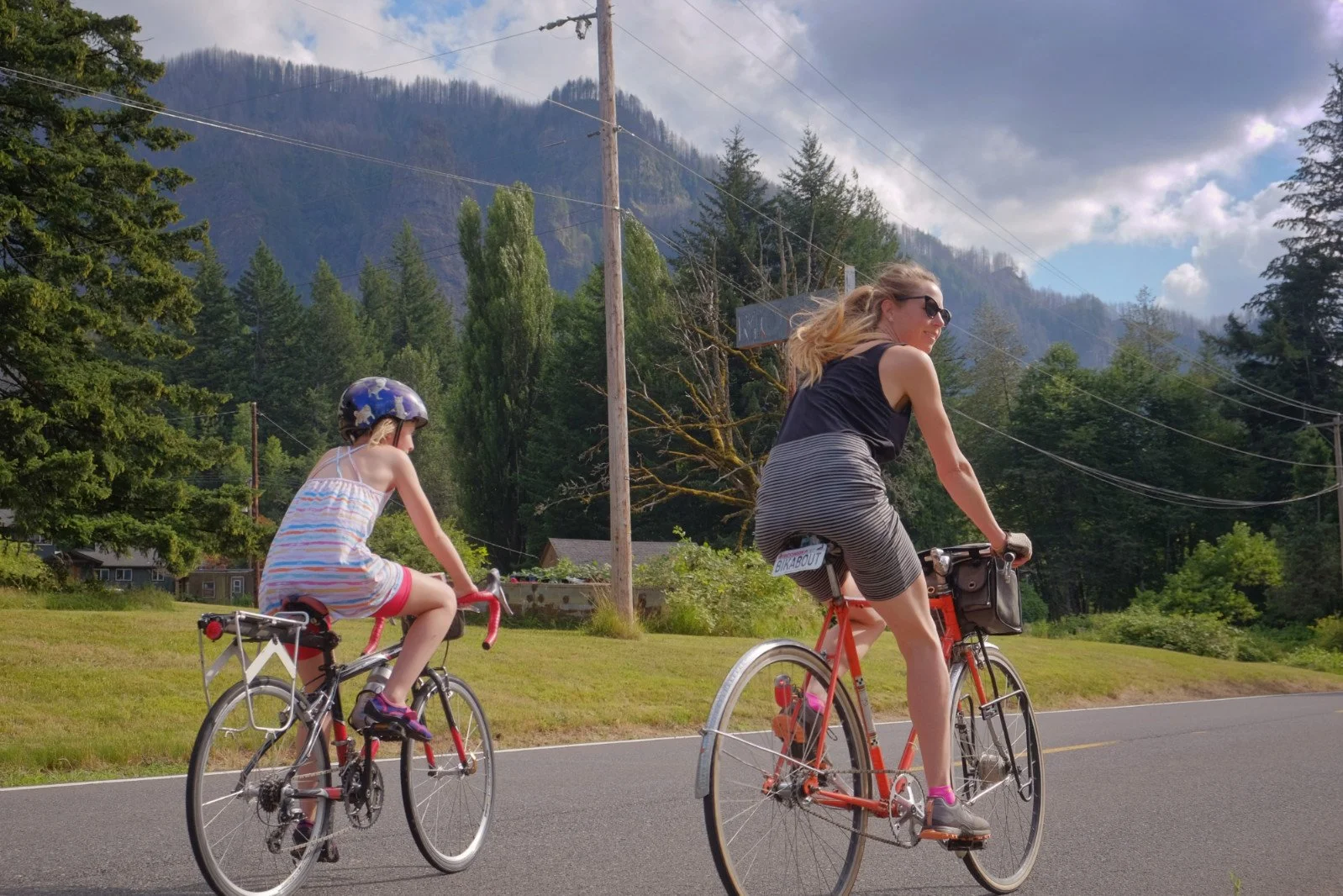
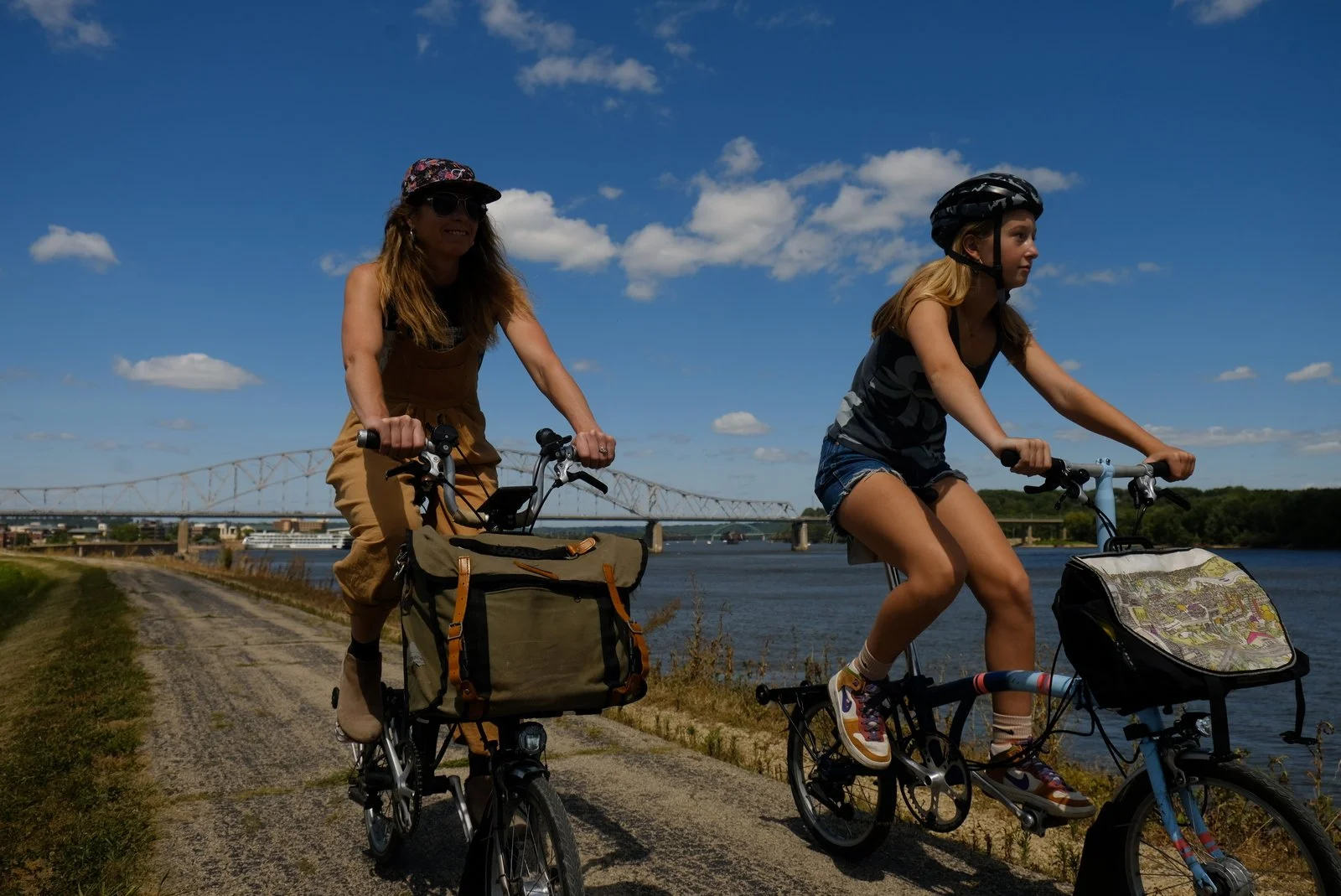
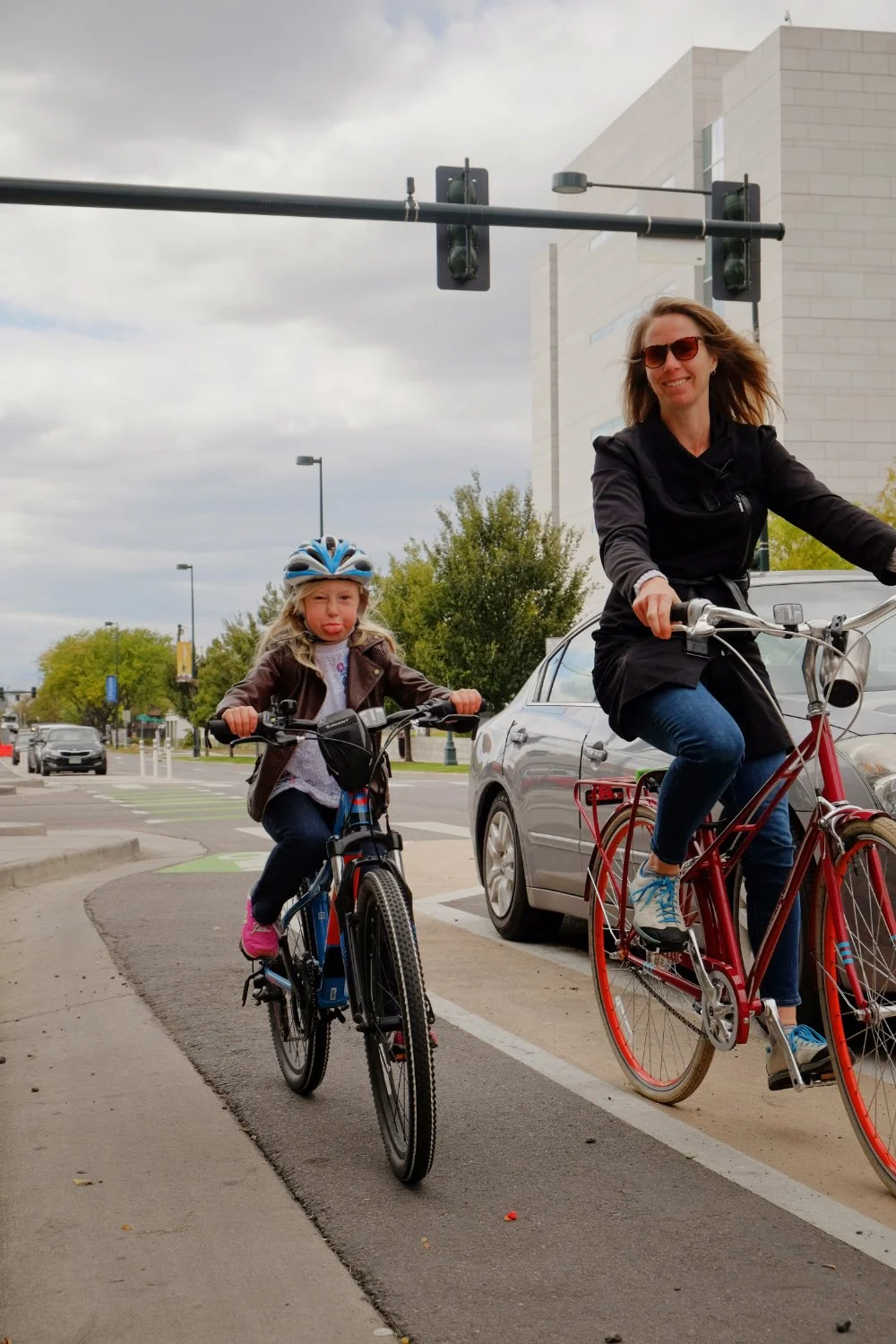
Photo Gallery: Mother-Daughter bike travels
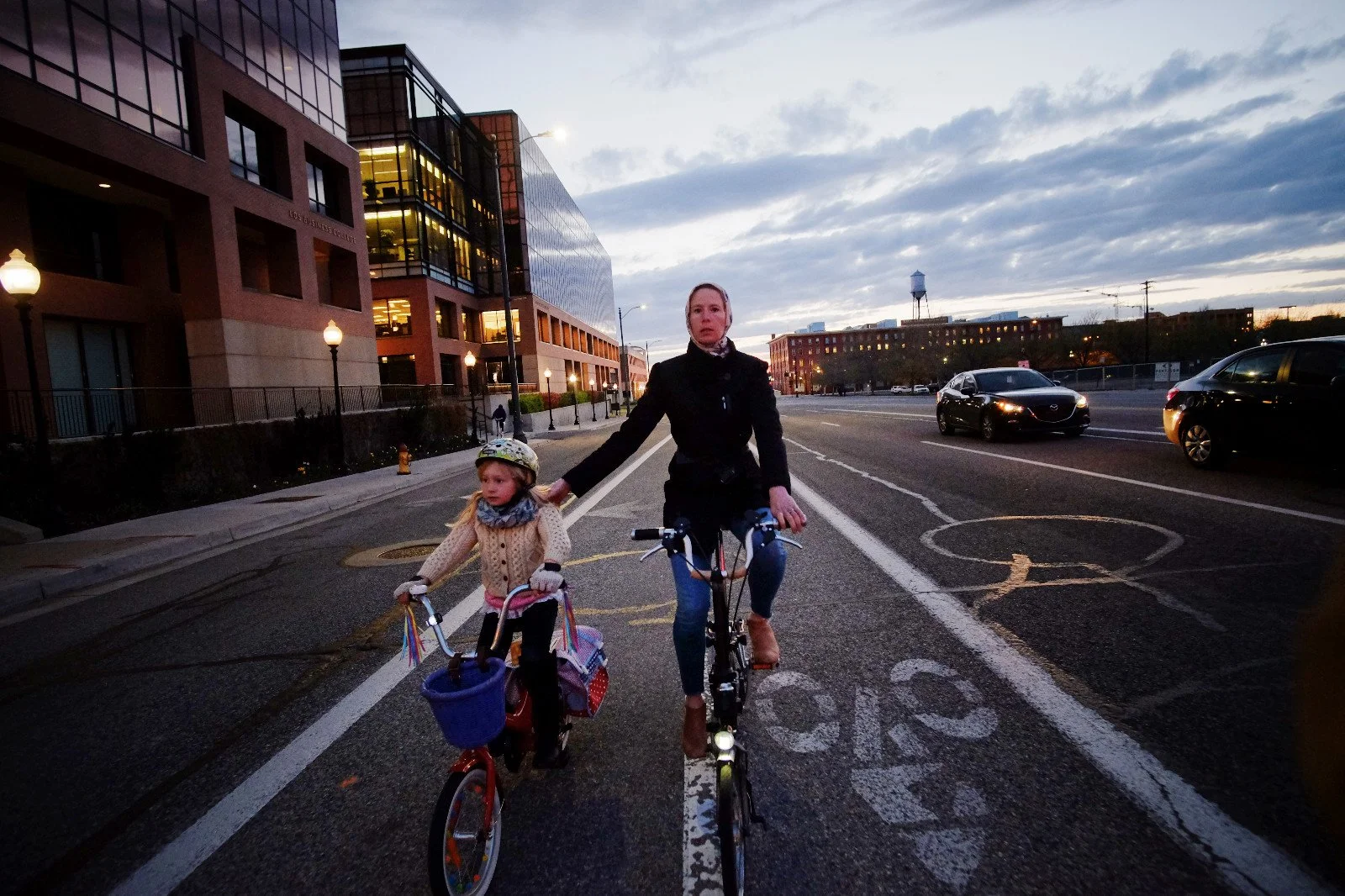
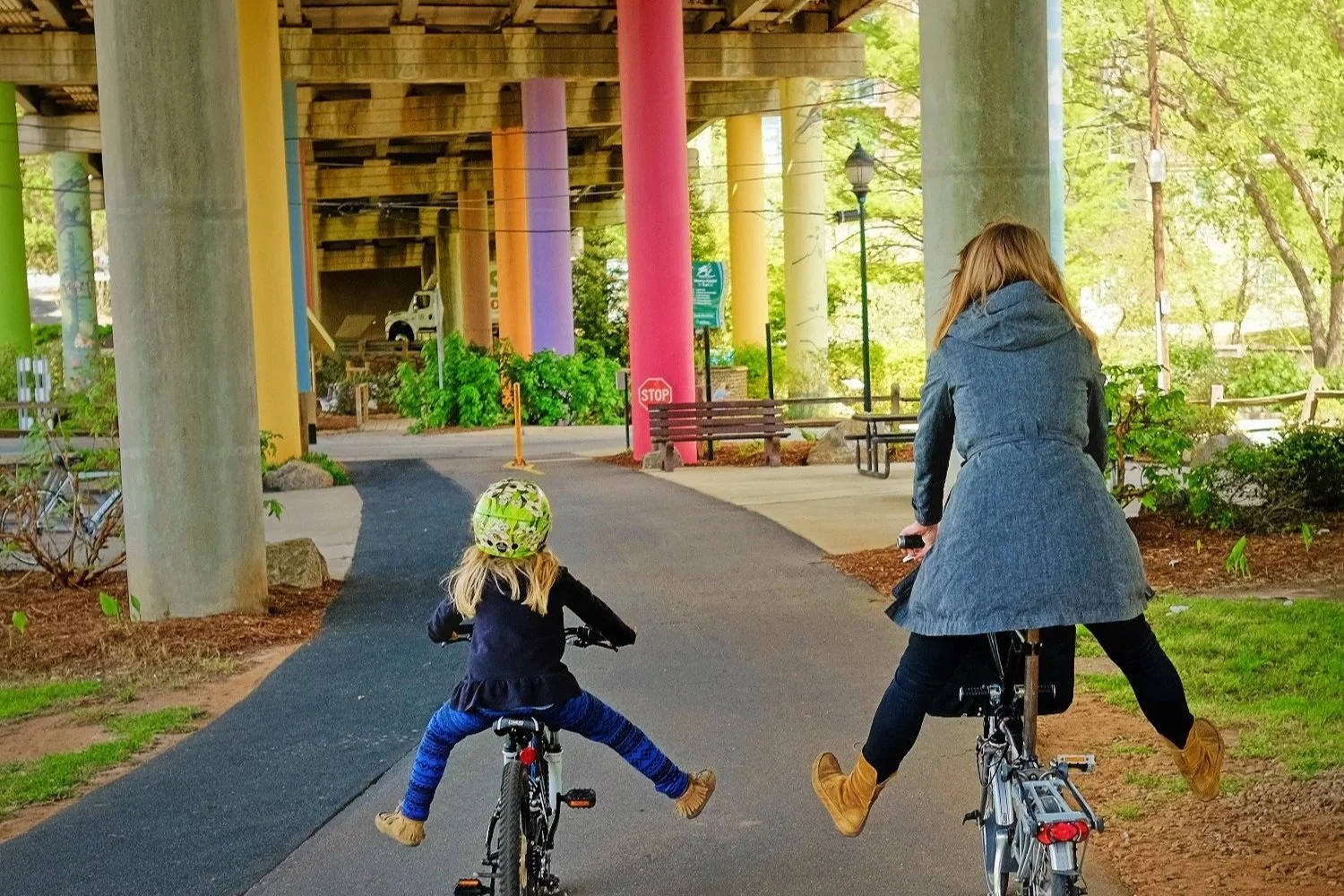
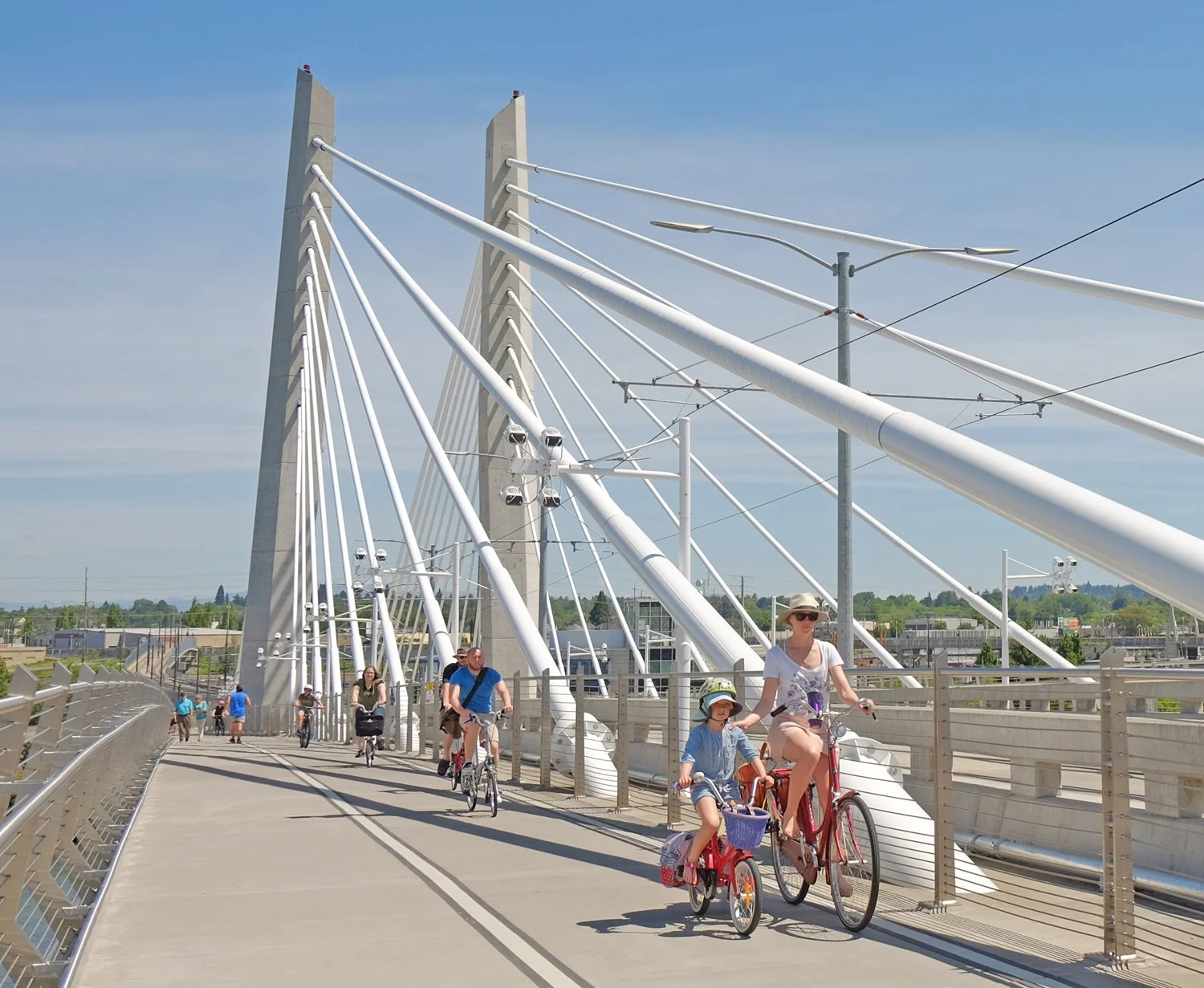
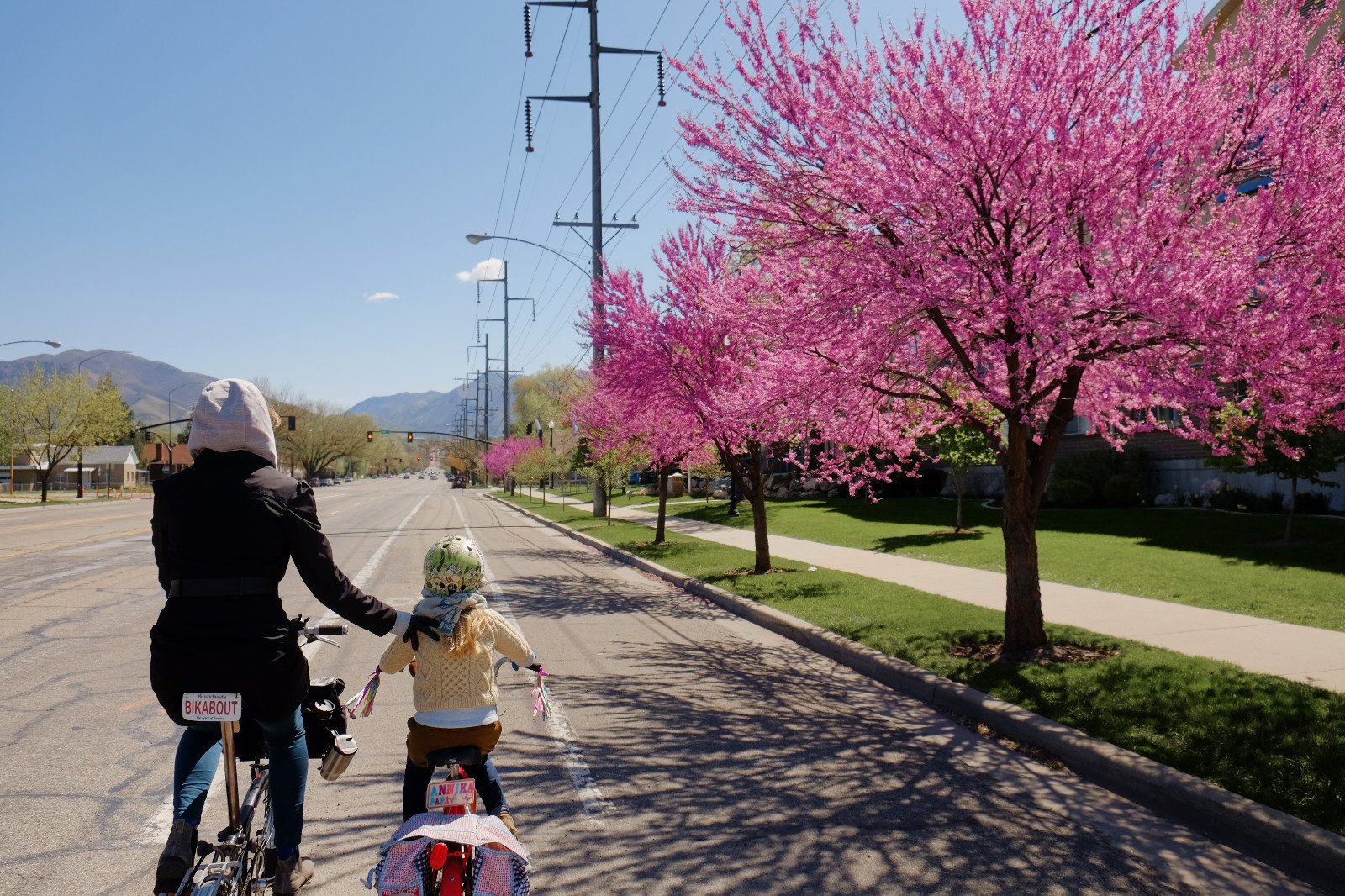
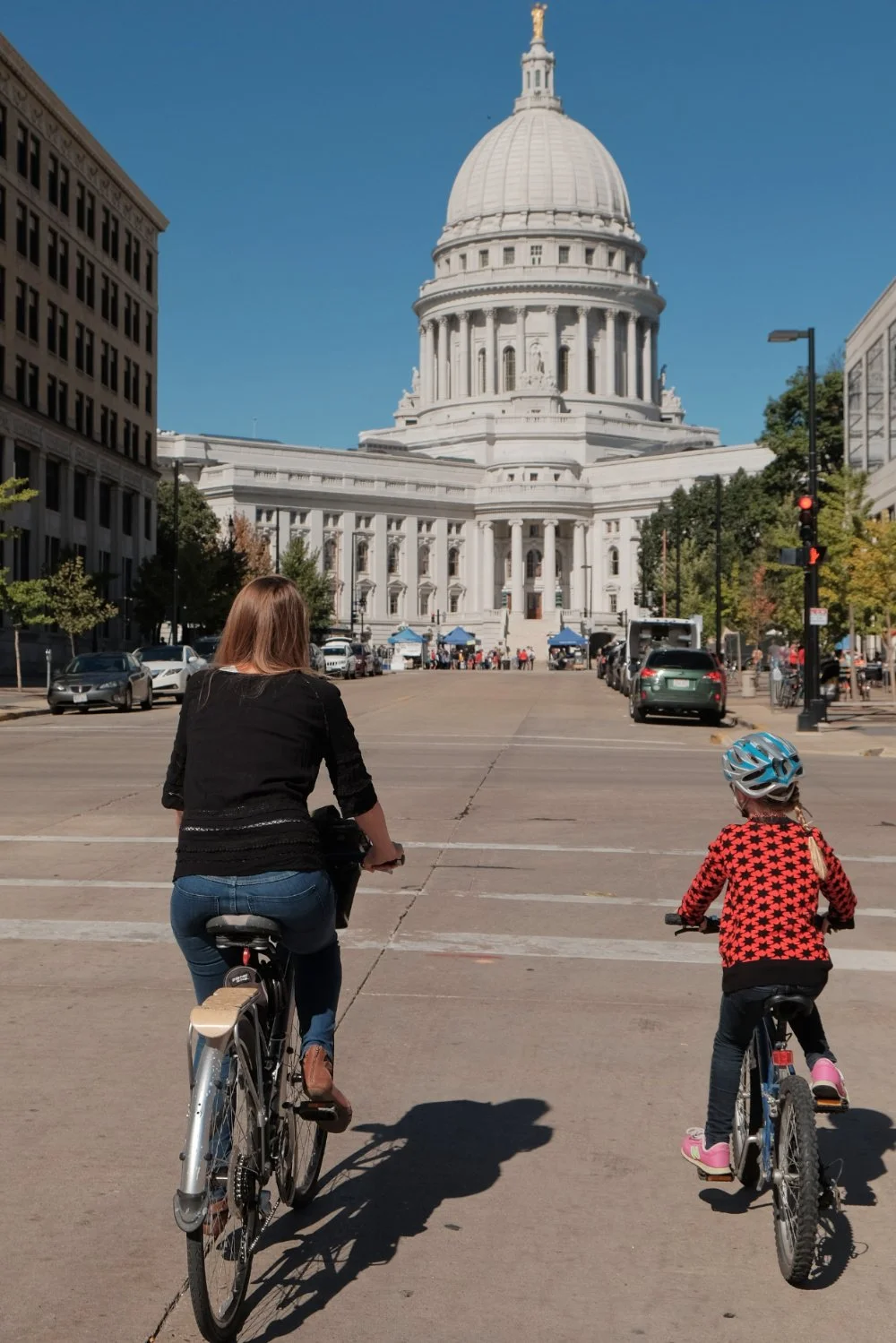
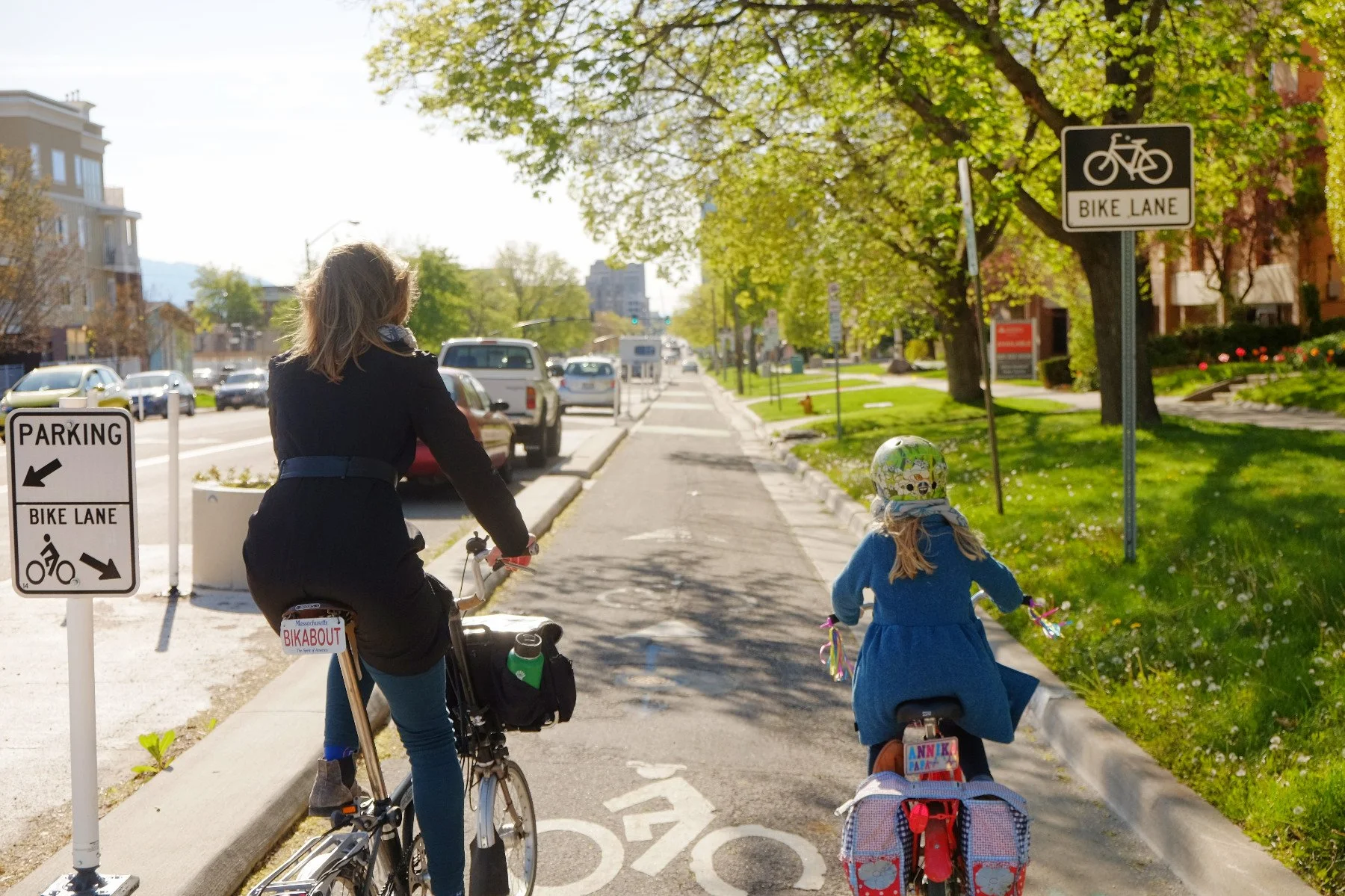
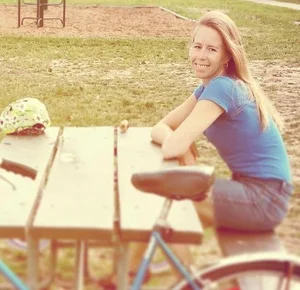
The family that rides together, stays together. This blog post features a directory of the best family bike shops, connects you to local family biking groups and outfits you with a chart of "Bike Types by Kids' Ages".